Showing posts with label Restauradores. Show all posts

03/03/2010

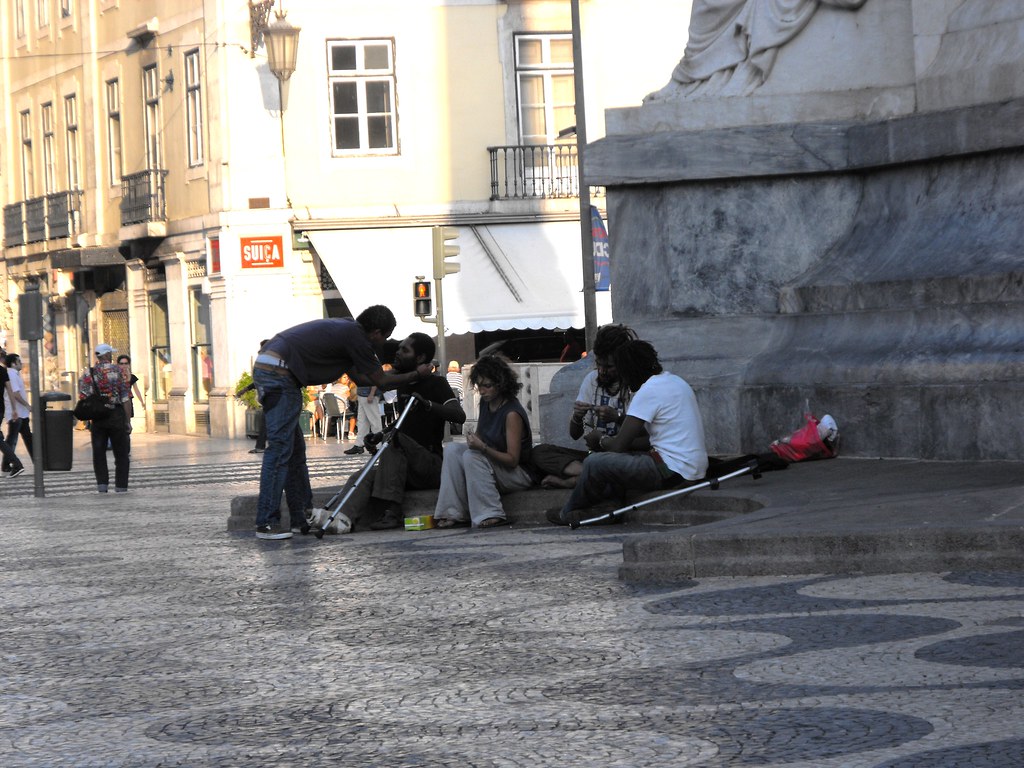
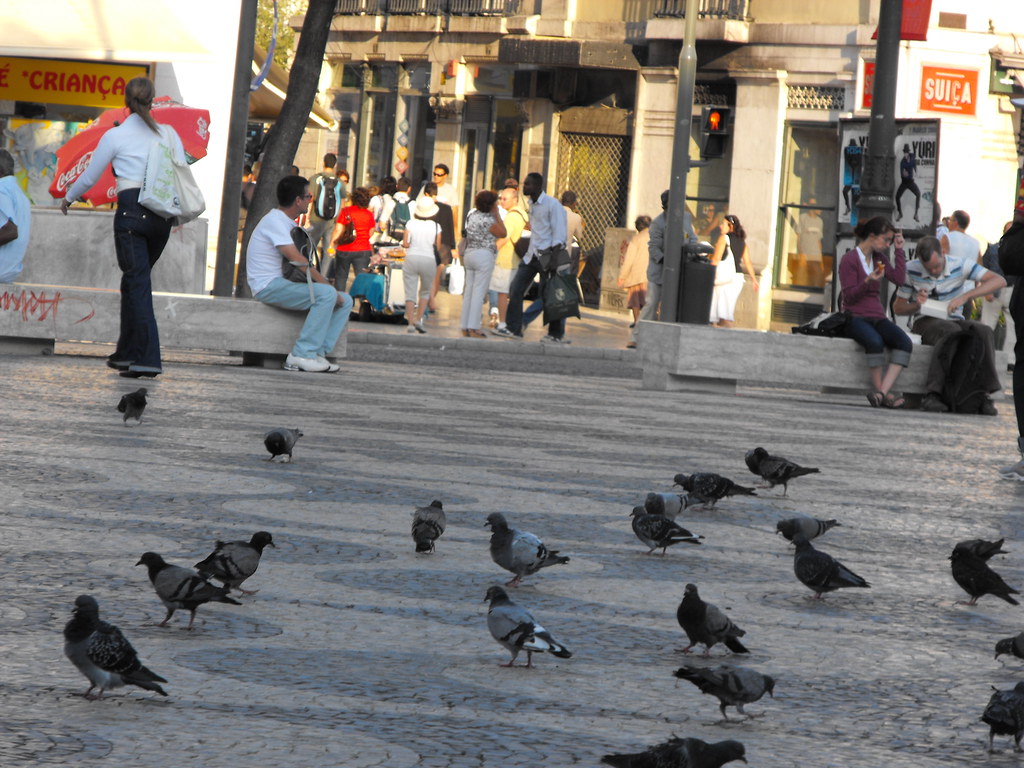
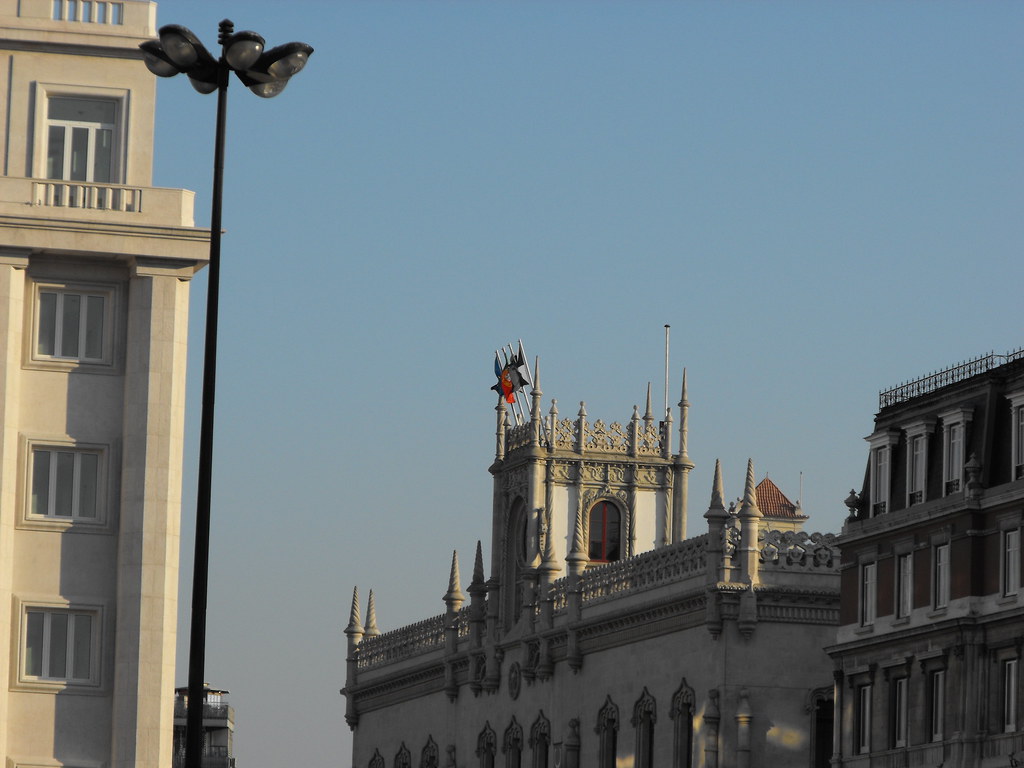
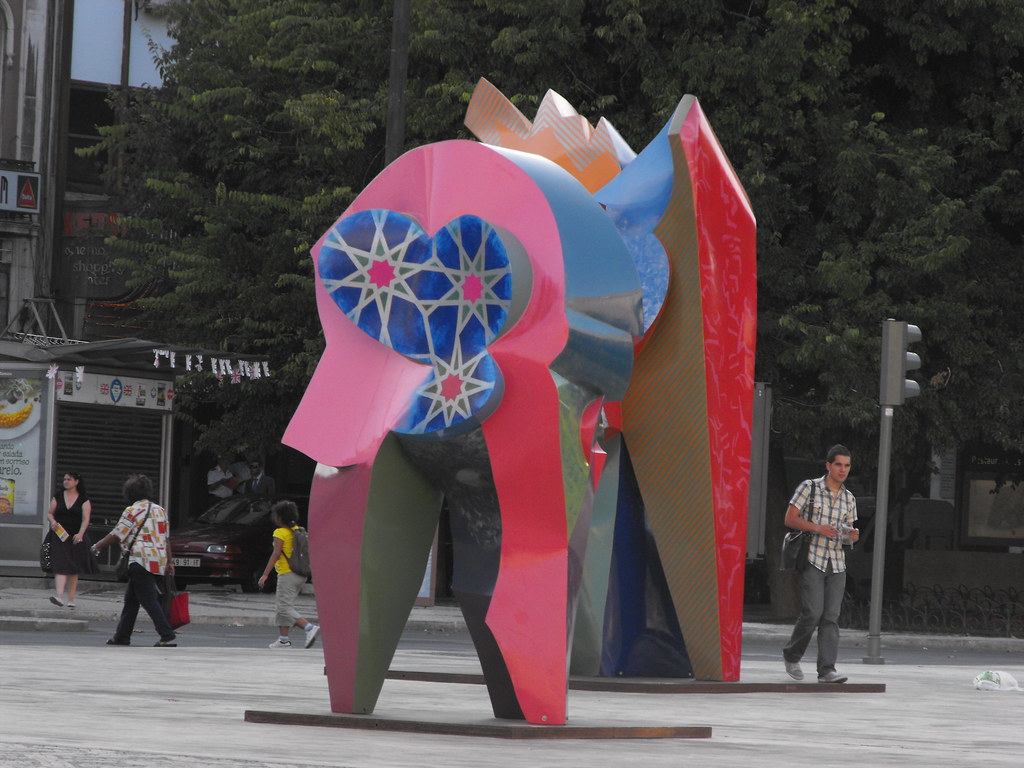
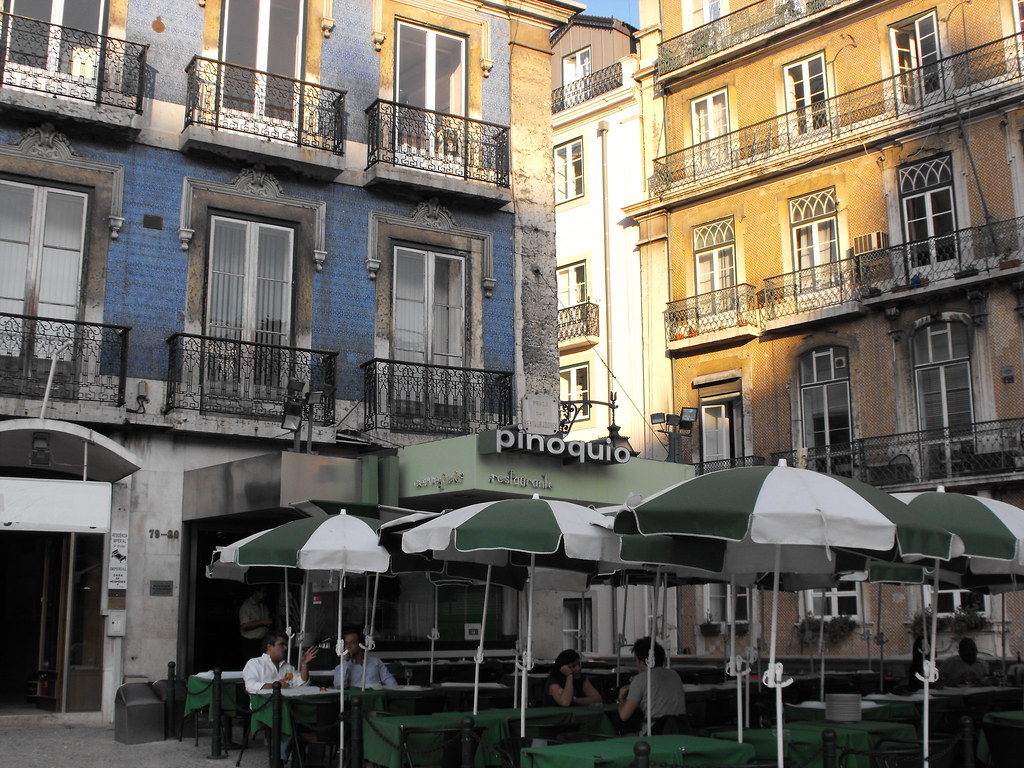
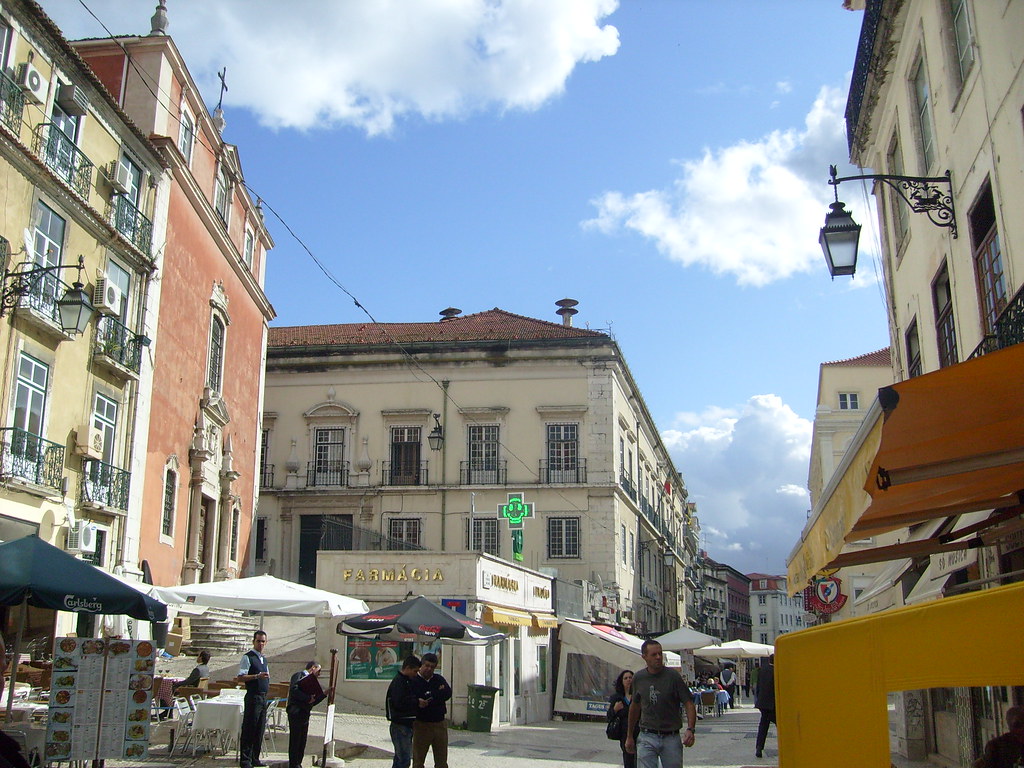
City Scenes Downtown 2


   Rossio square

"Rossio is one of the most beautiful squares in Lisbon. People pass here everyday, rushing for work, and hardly take the time to look around. It's not only the beautiful monuments and the fountains, or its fascinating history... Rossio is a living book.

Recently renovated, it hasn't lost any of its mysticism... Feel it around the D. Maria II National Theatre, where many plays were, and are, performed and seen by Kings and Queens, around the fountains used at the beginning of October to baptize the freshmen as they were about to enter the University -, around the cafes frequented by famous Portuguese personalities - like Cafe Nicola founded in 1929 - and yes, oh yes, smell it on freshly roasted chestnuts that have been sold in the Rossio Square for many many years.

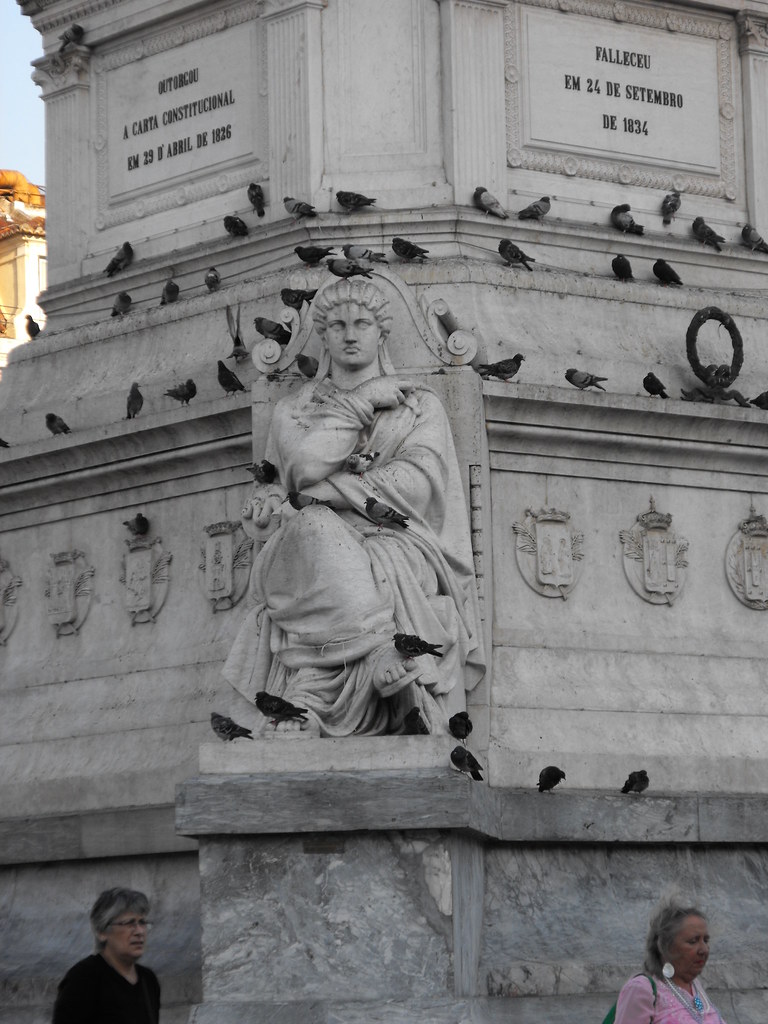
In the middle of the square there's a statue of Dom Pedro IV and at its foot the four female figures representing Justice, Wisdom, Strength and Moderation, qualities attributed to Dom Pedro himself.
The originally called 'Dom Pedro IV Square', got the name Rossio from the local people and it's still today a traditional meeting point both for Lisboetas and visitors." [*]

Take a tour :)


Ver mapa maior

20/09/2009

Random Restauradores I


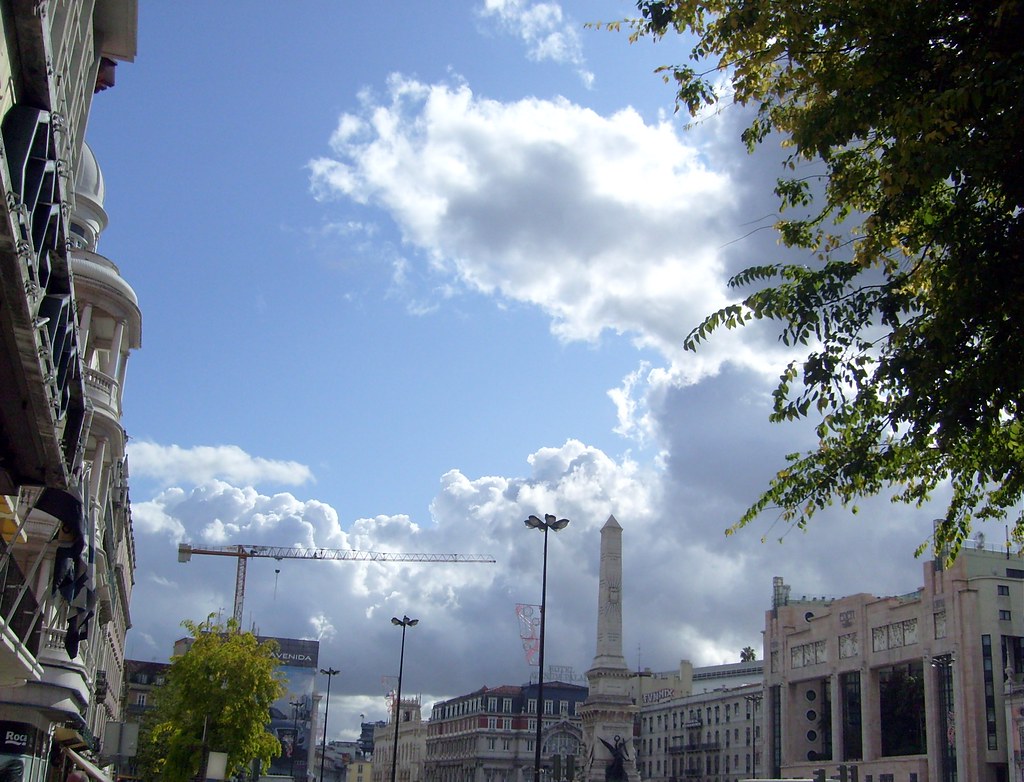
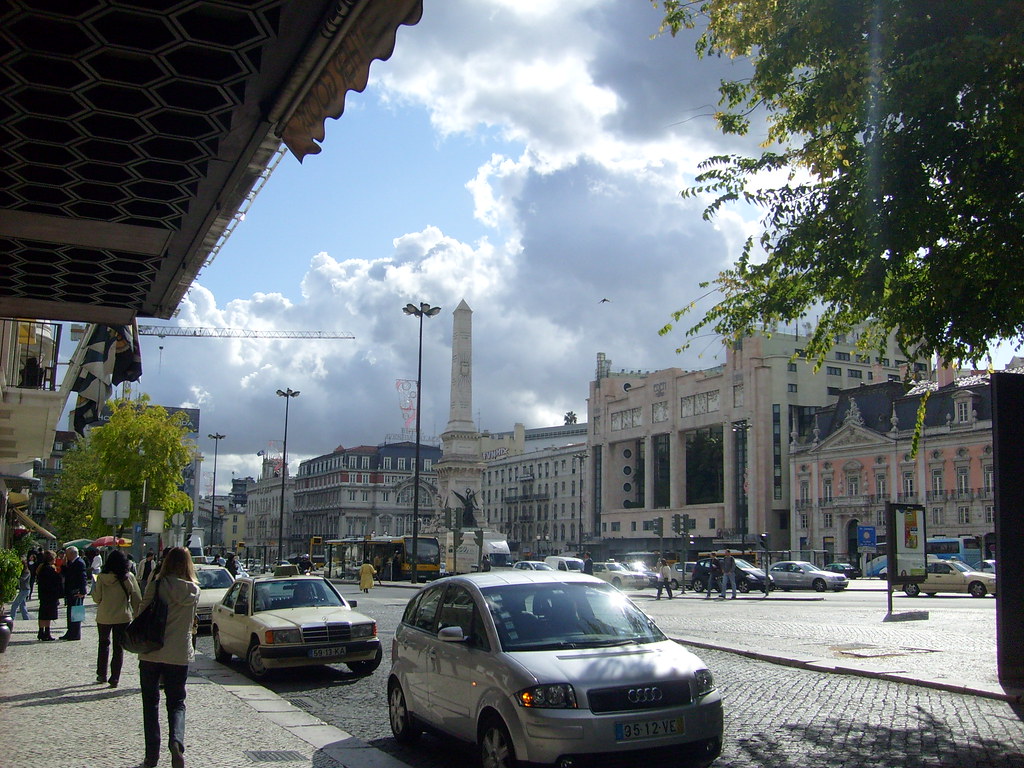
Restauradores Square
A large busy central square

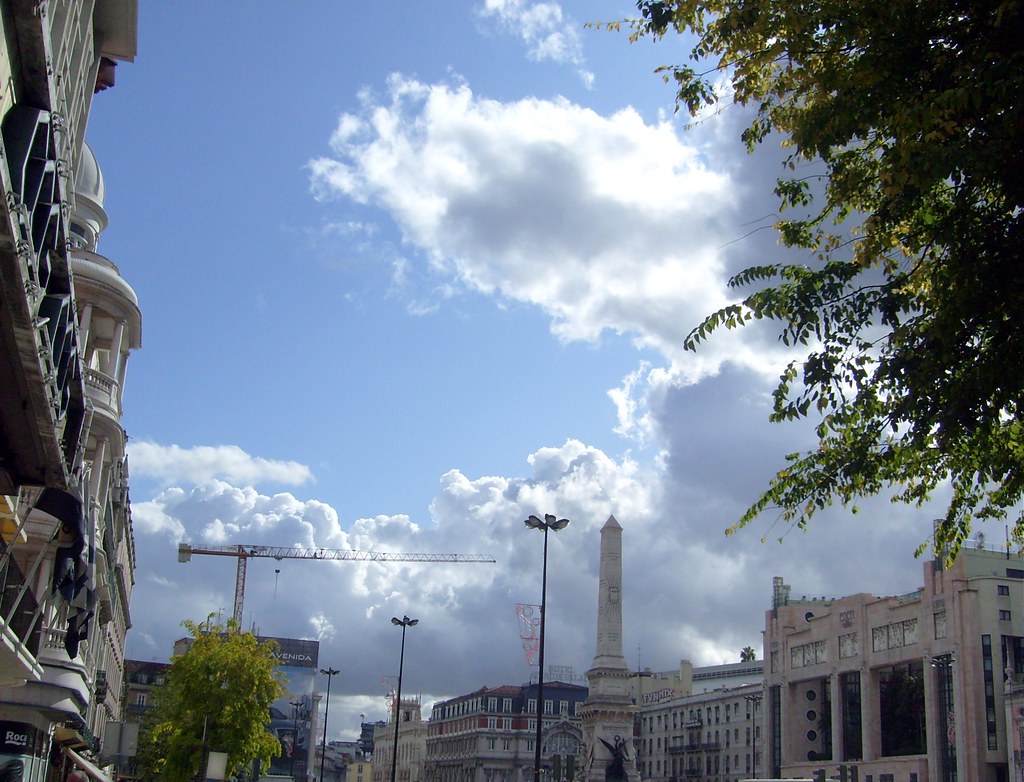
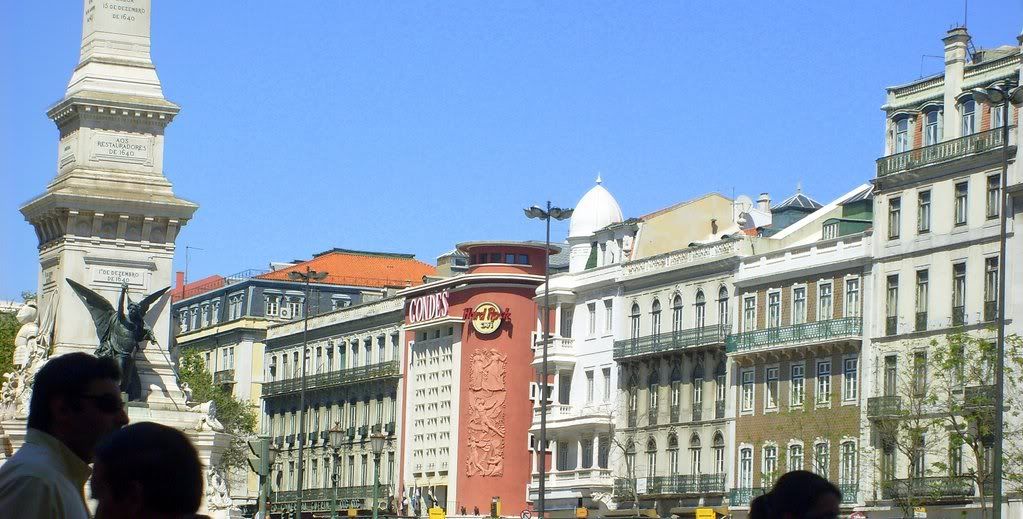
This large square commemorates the country's liberation from 60 years of Spanish rule in 1640.

In the center is a patterned pavement surrounding a 30-meter high obelisk with two bronze figures on the pedestal depicting Victory and Freedom.

On the west side is Foz Palace, the former residence of the Marquis of Foz, now housing a national tourism office.

Built from the mid-18th to the mid-19th centuries, the palace may only be visited with special permission. The interior and its furniture were inspired by Paris' Versailles Palace and the most interesting rooms are the Renaissance-style Stove Room, the Mirror Room, and the atrium of the chapel of Our Lady of Purity.

Next to the palace is a building known as Eden Cinema, now serving as an aparthotel (which may be booked here). Built in 1929 it is considered an art deco marvel, with its lavish interior having masqueraded as a Russian hotel in the Wim Wenders film "Until the End of the World."

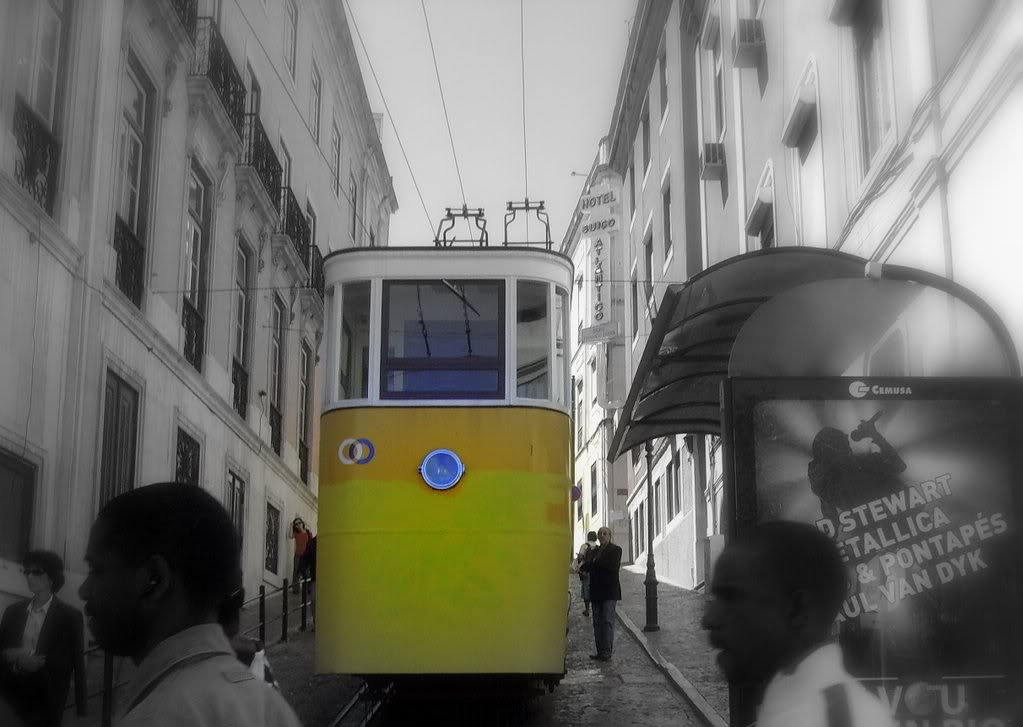
A few steps away is the much photographed Elevador da Gloria, a funicular that links downtown to the Bairro Alto district.

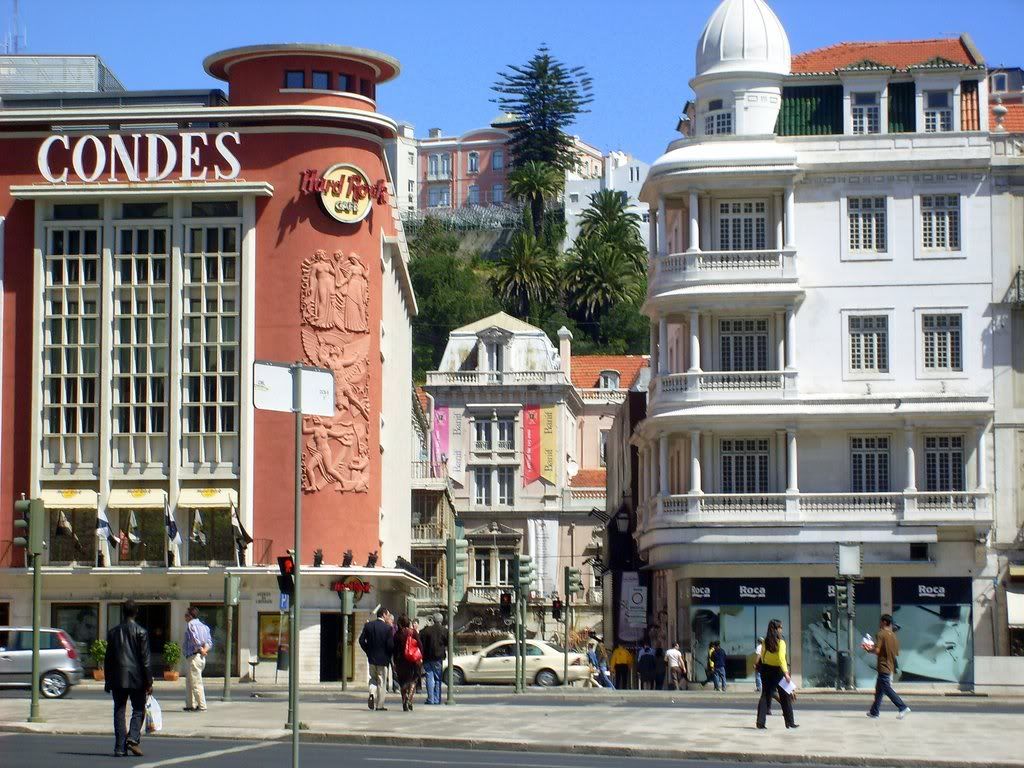
Another popular attraction in this square is Lisbon's "Hard Rock Cafe", which is always a popular attraction for homesick tourists or memorabilia collectors of the world-famous music-themed restaurant. [*]


Ride Lisbon's metro, buses, and trams for FREE with the Lisboa Card.

Where: Baixa
How: Metro - Restauradores Station

Sights Nearby

Avenida da Liberdade - The city's main avenue.
Rua das Portas de Santo Antão - Pedestrian street lined with seafood restaurants.
Rossio Station - A monumental train station.
Rossio Square - Lisbon's elegant main square.
Figueira Square - Busy square and transporation hub.
São Domingos Church - A church marked by tragedy.
Comercio Square - Monumental riverside square.
Municipal Square - Home of the City Hall palace.
Rua Augusta - The city's main shopping street.
Conceição Velha Church - Church that survived the Great Earthquake.
Santa Justa Elevator - An Eiffel Tower-like landmark with views over the city.
Marquês de Pombal Square - A roundabout dedicated to one of the city's historical figures.
Edward VII Park - The city's largest park


07/12/2008

#342 - Rua portas de Santo Antão


My favourite street!

06/12/2008

05/12/2008

#340 - Restauradores


04/12/2008

#339 - "The arrivance"


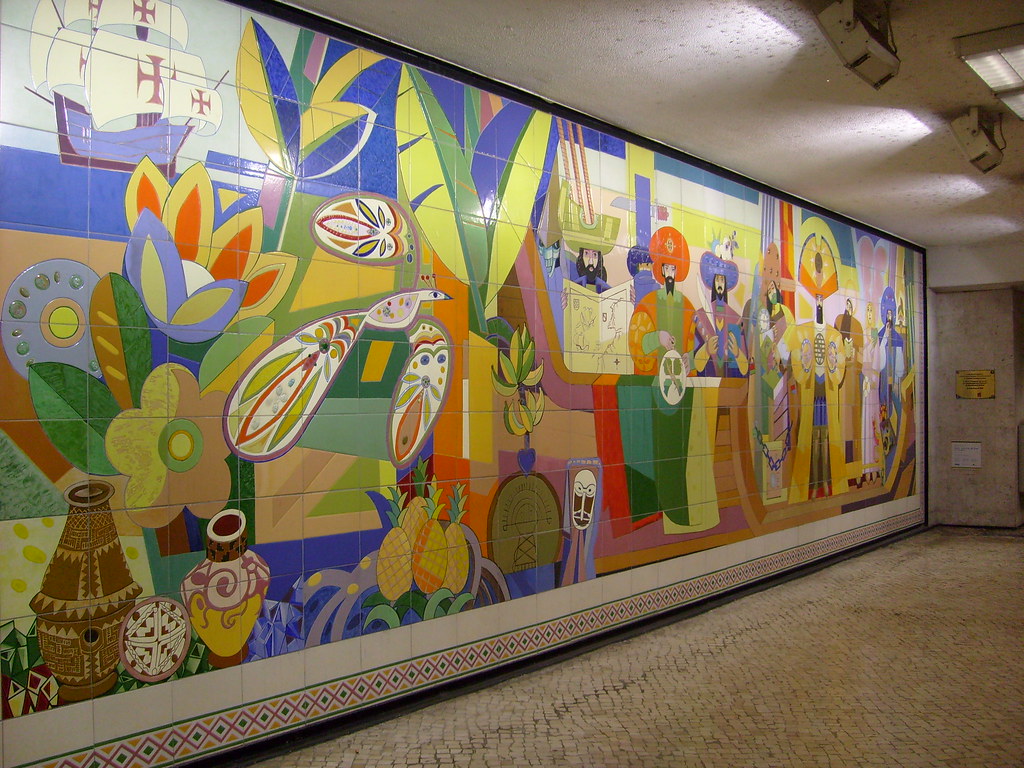
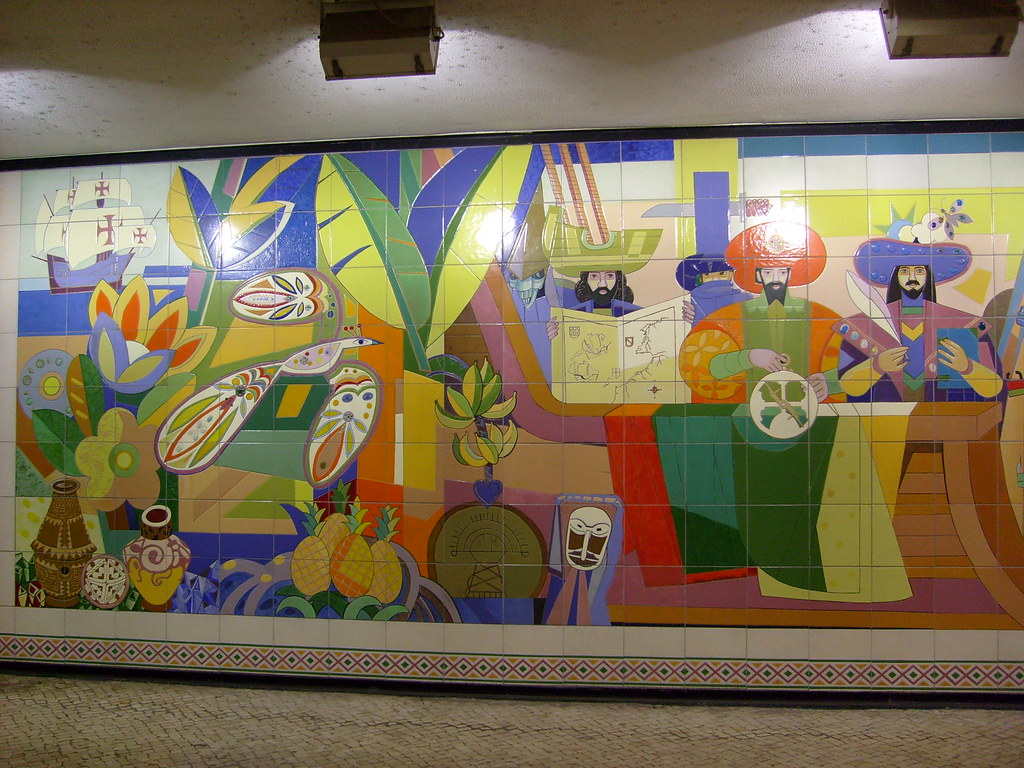
In 1994, is installed in the lobby of the Restauradores metro station a work of the Master Luiz Ventura called "Brazil-Portugal: 500 years - the arrivance", which is the counterpart of the work of Master David de Almeida "The road of Water" and "The ways of Heaven ", Offered to the subway station Conception of Sao Paulo.

The author makes us a description of work:
"The arrivance" is an interpretation of the meeting of two radically different cultures, meeting that initiated the process of what is now the Brazilian nation.

To mark these differences the artist transforms them into characters to occupy the place of the figures recorded by history. Thus, the mercantilist Idealism is the central character, bearing the pictures of private property on one side and the Religion of the other. Completing the cast of 12 characters we have Well, evil, the Greed, the Militarism, the Science, Technology, Culture, the ambiguity and, finally, the Phantom.

The panel is surrounded at the base and sides by a frieze with drawing from the plot of vines, straw, common in many tribes of Brazil.

The ceramic gems on show are of indigenous technology and art - the ocarina of the tribe Tukan, the bowl and pot-Tribe Kadiwéu.

The flora permeates the picture that leads us to a Portuguese ship the whole cloth. Of mangrove roots, fruits and bird (this with elements of indigenous Plumeria) with a graphics (not identified in order to signal the extinction of indigenous peoples) and ceremonial mask Tukan, together with the vessel and its crew.

Presents itself, then the decoding of some signs the second author's own words:
The Idealism mercantilist - central character that marks the story.
The Private Property - in Brazil was an agrarian society differentiated, that is, a society without social classes, not private property. Symbolic elements of ownership, ancient and contemporary, feature the character.
The Science - symbolized by the astrolabe, the presence of mathematicians, geographers, astronomers and pilots who created the Rules of the Astrolabe, instrumental in the advancement of naval expeditions. The astrolabe is supported in tissues with the national colors of Portugal and Brazil.
The Technology - The technological advance is shown by the shipbuilding that has allowed the squad to travel by Pedro Alvares Cabral to Brazil. The nautical knowledge are symbolized by the statement which marks the coasts of Spain, Portugal and Africa. Several ships in the ocean, rumando to Brazil, complete the "framework".
The Culture - Represented by character with pen and book in hand. Hat in the sun, moon, the cloud, the butterfly: symbols of artistic creation.
The Religion - represents a religious including the concepts of Good (Angel) and Evil (devil).
The Good - with angel wings and halo. Flower and heart recall its libertarian fight of the 70s with the slogan "Peace and Love."
The Evil - The devil signals its symbol.
The Greed - symbolized by the left hand supported the lid of the trunk with objects of arrest or punishment used to subject them slaves.
The ambiguity - in the universal literature are often a dubious character or concealed that stimulates our curiosity, and that is represented here by embuçado crossed with a machete in the hat. Is the ambiguity in person?
The Militarism - The launches mark the use of force in defense of "established order".
The Phantom - Character situated at the edge of the vessel with the forest. Represent the threat of the unknown? Represent the fear of the spread of disease nonexistent in this continent? Represent the speaking of slavery. "
From the standpoint of technique used notes, if the paint brush, the rope vitrificável drought in enamel on ceramic, and applications of crystal Murano. The execution was in charge of designing Artistic Pottery, Sao Paulo, Brazil.
In August 1998 the link was inaugurated Restauradores Lower / Chiado, the lobby of South reshuffle of the station Restauradores entered into this venture. The corresponding design is from Architect of Manuel Bridge and the interventions are of plastic and Lake Nadir Afonso Henriques. [*]
31/10/2008

#305 - Sky watch today


10/06/2008

#162 - The new look of Glória Funicular

Photobucket - Video and Image Hosting


You can see it here, months ago when they erase an older grafitti.

17/04/2008

#108 - Hard Rock Café II


Recovered cinema Condes in Restauradores

11/04/2008

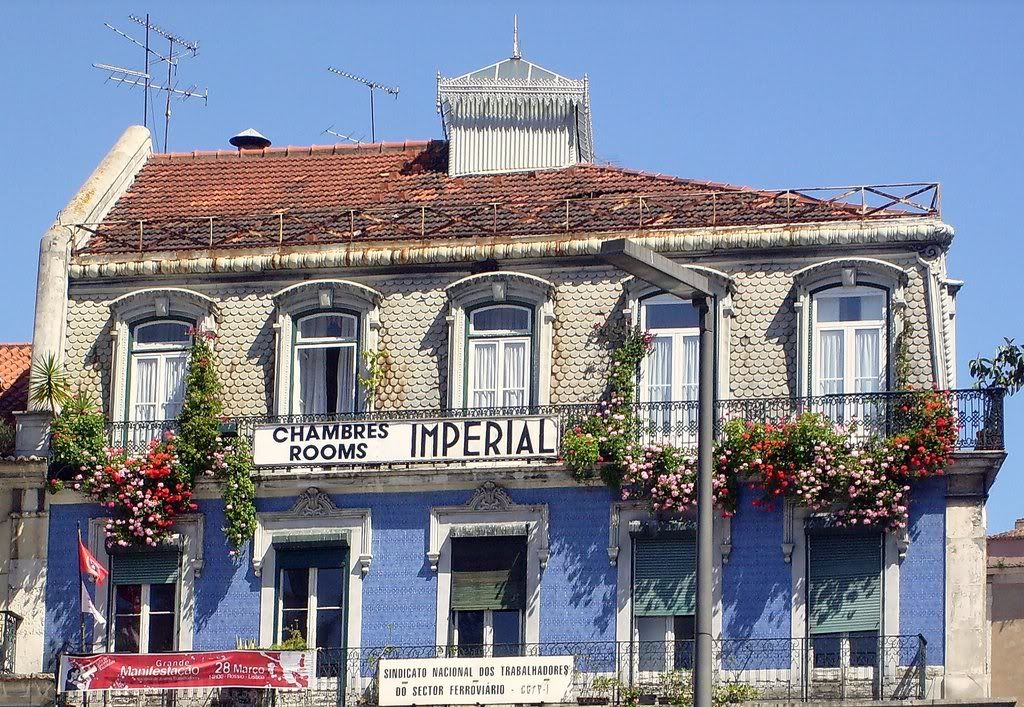
#102 - Pensão Imperial

Photobucket - Video and Image Hosting

Pensão Imperial - Chambres, Rooms

Top floor
Praça dos Restauradores, 78 - 4º andar

213420166

35 EUROS

09/04/2008

#100 - The opposite side of the square

Photobucket - Video and Image Hosting

The rectangular square is surrounded by 19th and early 20th century buildings. The most remarkable are the Palácio Foz, a palace built between the 18th and 19th centuries and boasting magnificently decorated interiors, and the old Éden Cinema (now a hotel), with a beautiful Art Deco façade dating from the 1930s, a work by architect Cassiano Branco.
Also notable is the old Condes Cinema, built in 1950 by architect Raul Tojal in Modernist style. It now hosts the Hard Rock Cafe of Lisbon.[*]

08/04/2008

#99 - The Glória Funicular

Photobucket - Video and Image Hosting


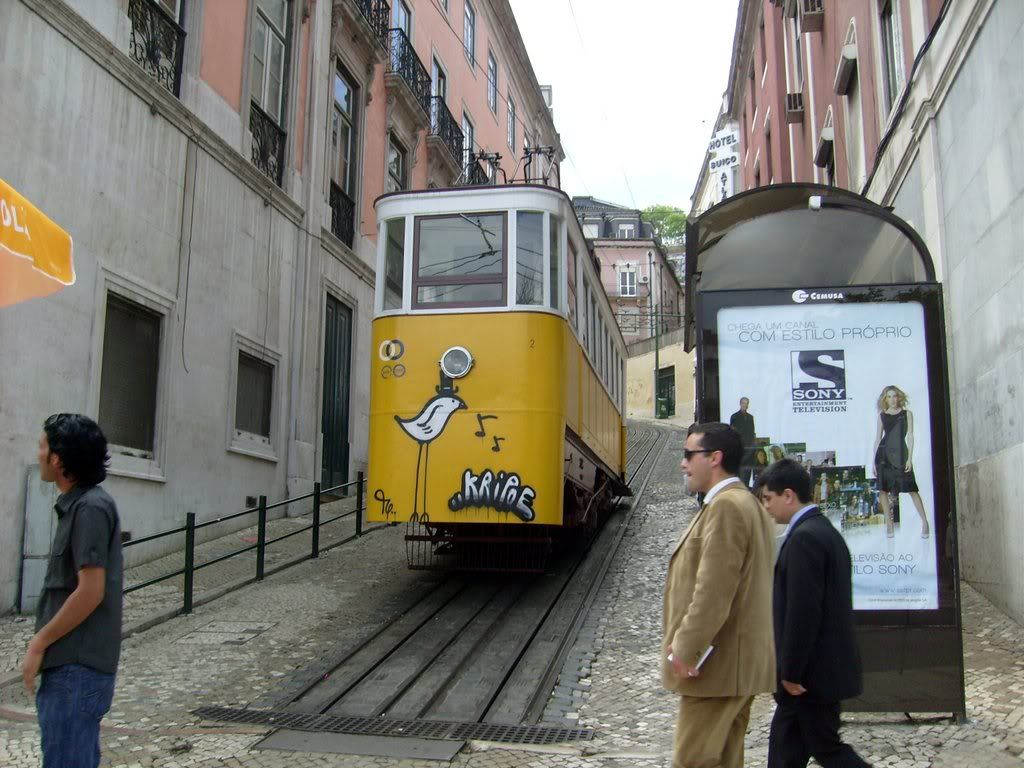
The Glória Funicular is one of the funiculars existent in Lisbon, right downtown, most precisely on the Restauradores Square. It makes the connection between this square and Bairro Alto (literally High Quarter) on a 265 metres journey up or down the hill. When you go out of the funicular you will find on the right side the S. Pedro de Alcântara belvedere, from where you get a magnificent view of downtown Lisbon and the magical St. George Castle. Just across the road, slightly to the right, at Rua de S. Pedro de Alcântara, nos.39-49, lies the Instituto do Vinho do Porto, where a vast range of port-wines may be tasted and purchased in the sumptuous surroundings of the Palácio Ludovice (1749). The Glória funicular opened on 24 October, 1885, and since then two funiculars have been going up and down, carrying locals and tourists on a journey though not being particularly rich in landscape, is still unique and very nice!
The Glória is the busiest funicular in Lisbon and also the most accessible for tourists as it lies next door to the main tourist information office in the
Palácio Foz. It is 265 metres long and has an average gradient of 18%. Operating hours are 0700-0055 every day. [*]

The Glória funicular was opened in 1885 and in February 2002 it was classified as a national monument. The lower part of it, painted in another shade of yellow, different than the original serves to hide grafittis. Since it is a national monument could have been painted in the original colour.

06/04/2008

05/04/2008

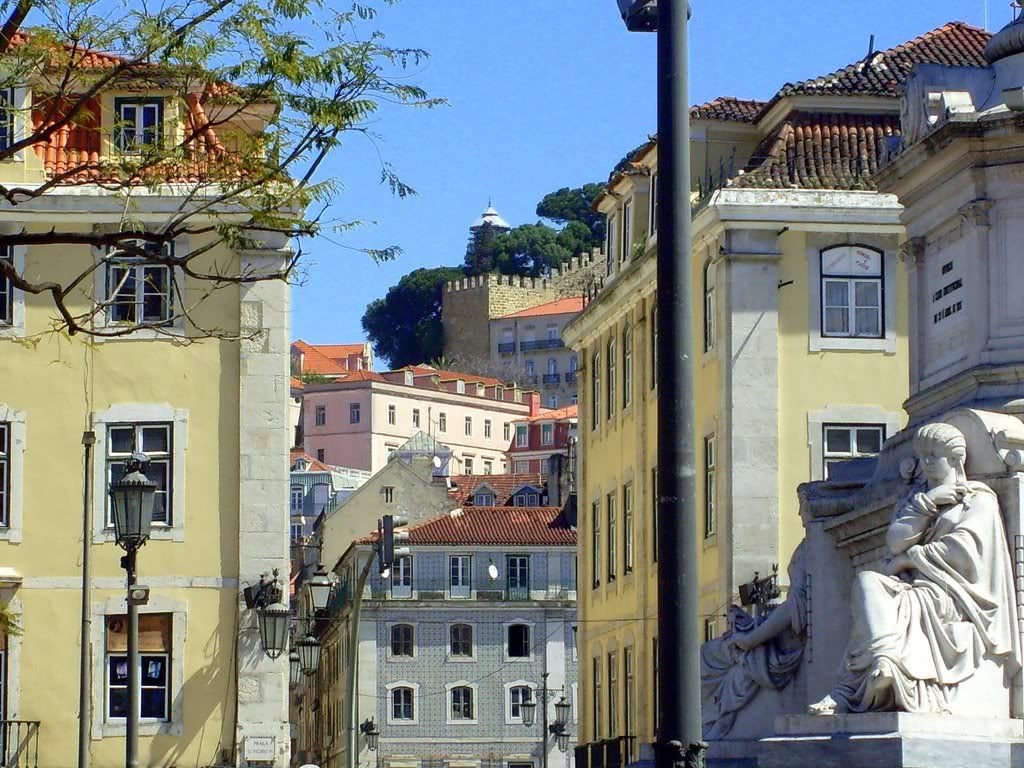
#96 - View from downtown

Photobucket - Video and Image Hosting

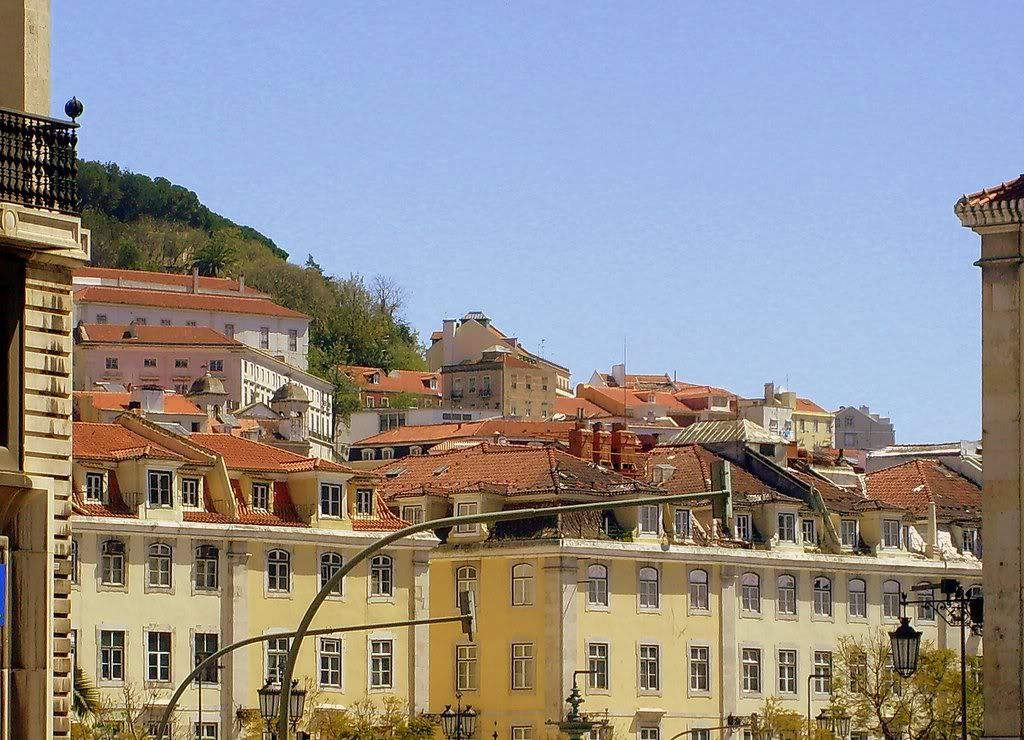
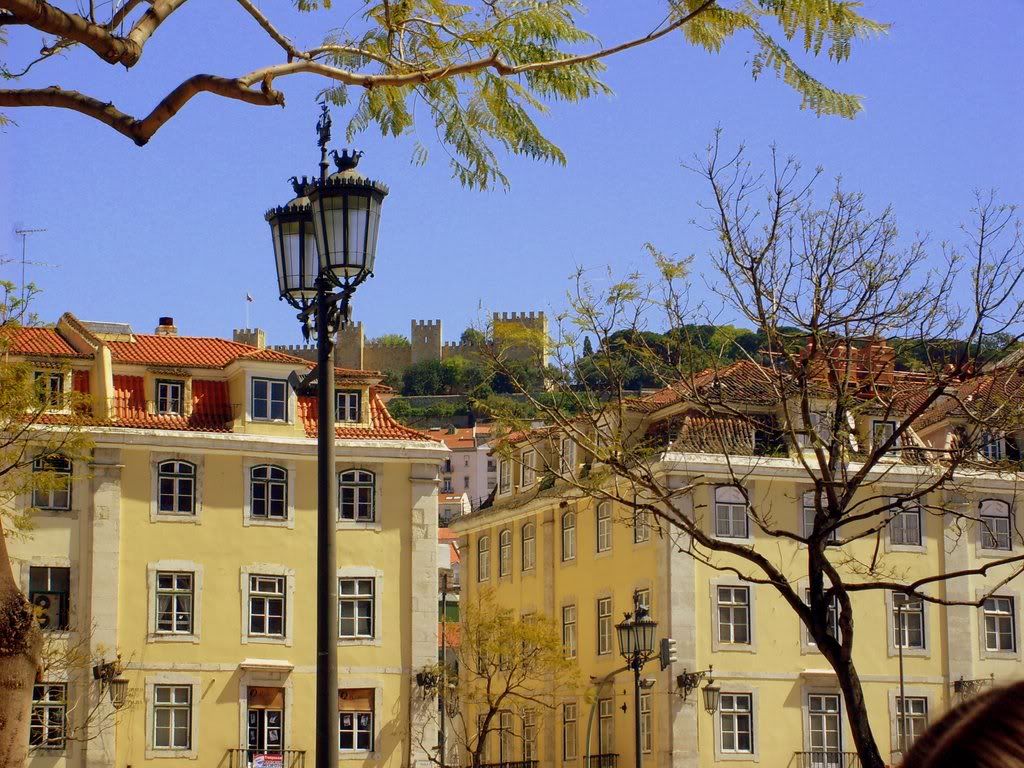
From Restauradores, among many things you can see the Castelo de S. Jorge.

06/01/2008

#6 - buy YOUR HAPPINESS!


"!It is Christmas!
Run to the nearest
shopping mall and buy
YOUR HAPPINESS"

05/01/2008

#5 - Palácio Foz


The Palácio Foz was built in the XVIII century by the Italian architect Francesco Fabri to the Marquis de Castelo-Melhor and eventually receive the name of the Marquis of Foz who lived in the palace in the XIX century.

03/01/2008

#3 - Pigeon