
Picoas Station
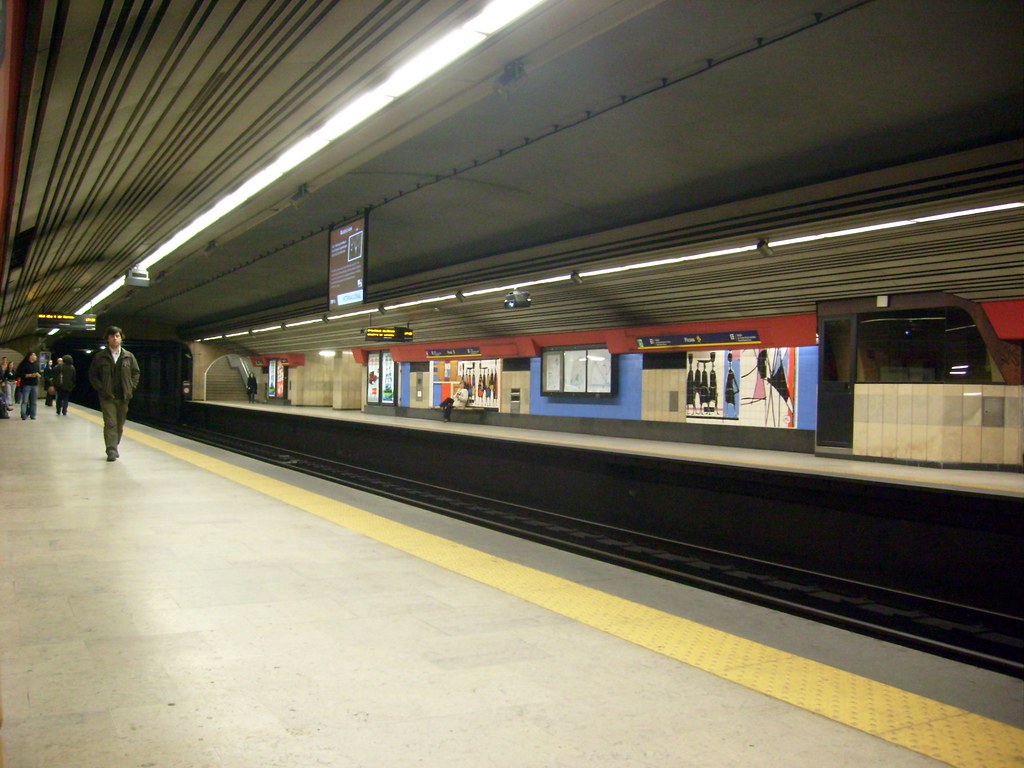
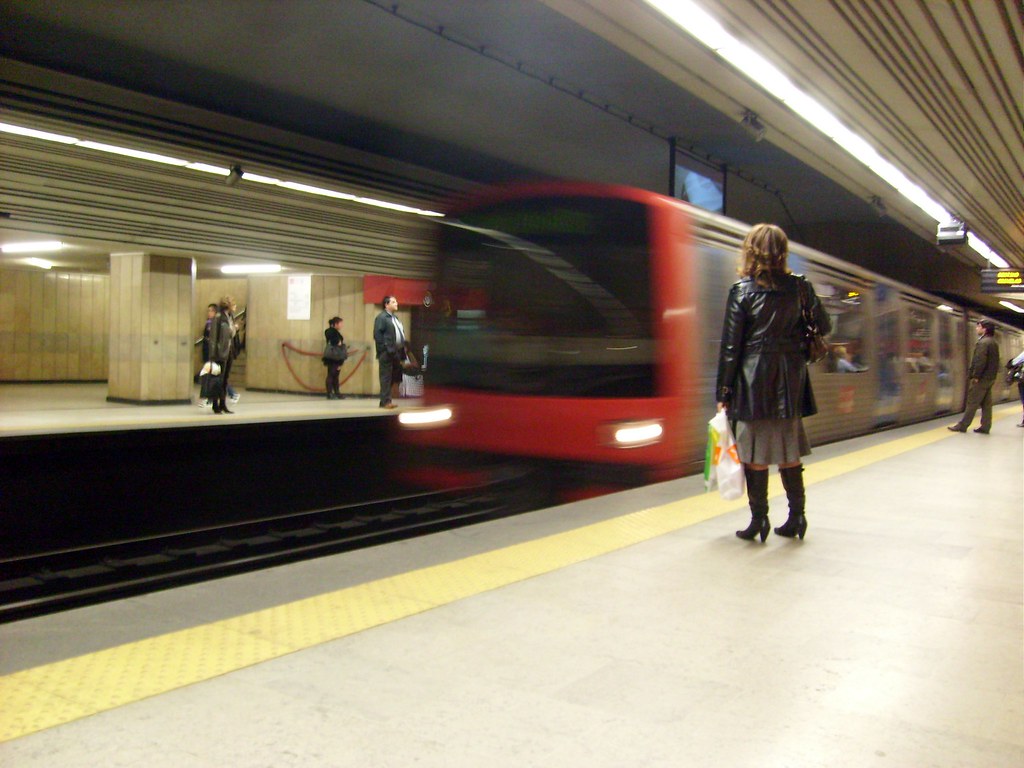
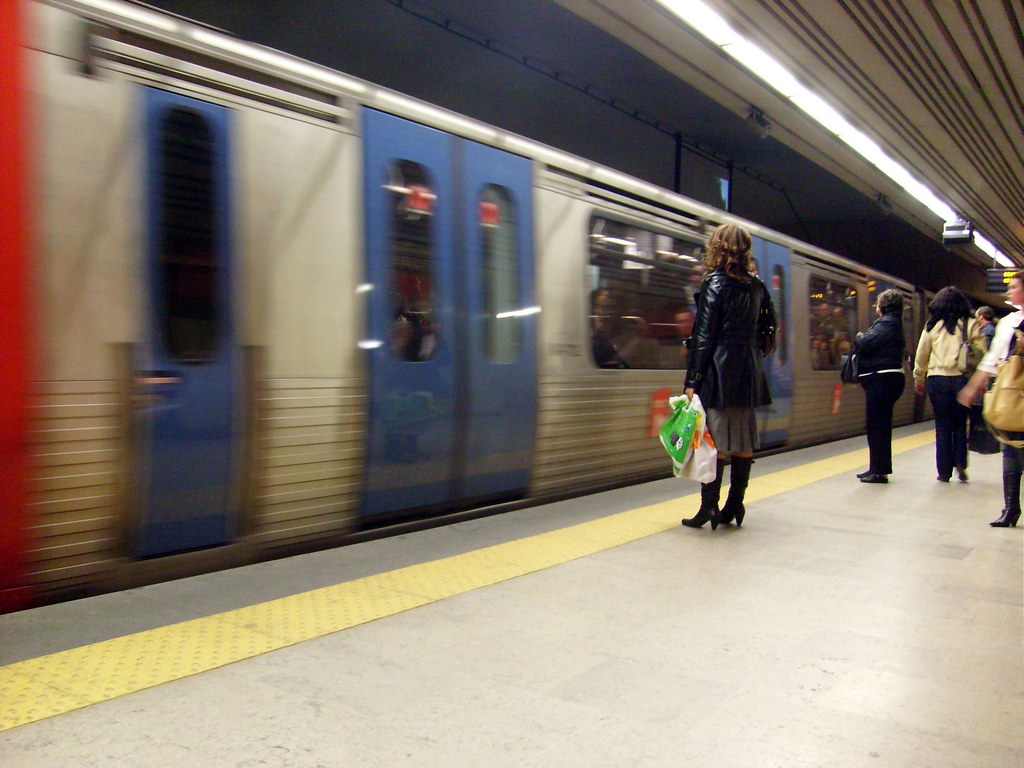
"The station opened to the public in 1959 when the inauguration of the network. In architectural and artistic followed the program then adopted for all stations that step, the project is the work of architectural, architect of Keil do Amaral and Falcão e Cunha Arq º and the coating of the work of tile painter Maria Keil.
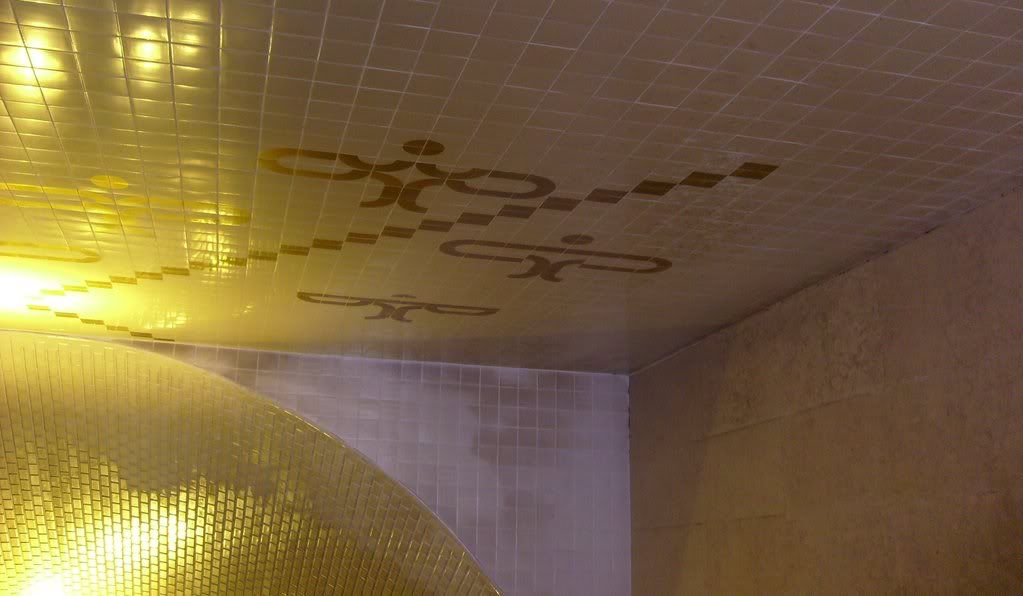
The standard adopted by Mary Keil for the coating on tiles has been achieved through the use of a variety of plans, with variation of proportion and color, in shades of blue, green and white.
In 1994 the station was the subject of works of renovation and expansion, included in the program of upgrading and expansion of the Metro network. The Architect of Diniz Gomes was the author of the architectural project, the artist was invited Martins Correia plastic.
Martins Correia substantiate their artistic creation in a tribute to women in Lisbon. Over the platforms are panels with topics related to the city, its symbolism and history. The typical pictures of the city, Working Women. The heraldry of Lisbon, the boat with the crows, the black and white flag of the city, Roman columns, all appears in order to better identify the nature of representation plastic.
It's written by Martins Correia was placed in the lobby access North East, an area endowed with its own production to highlight the best, a painted bronze statue in representing Pomona, Greek goddess of fruit and plenty.
In the lobby Sul, Rua Andrade Corvo of access offered by the Paris Metro (RATP) and inserted into a program of cultural exchange between networks of underground, was installed a piece of furniture known as access Guimard. These accesses were created at the beginning of the century by Hector Guimard, Art Nouveau's great name to adorn the entrances of the Paris Metro.
This is a symbolic piece of art in the Metropolitan and when it appears, had great impact on the Parisian urban landscape. The artistic style in which they were built (the new art was still taking its first steps) are not known to most people, they called him the "Subway Style". Today these pieces are part of the Parisian artistic heritage, it is an "ex-libris" of the city." [*]
"The station opened to the public in 1959 when the inauguration of the network. In architectural and artistic followed the program then adopted for all stations that step, the project is the work of architectural, architect of Keil do Amaral and Falcão e Cunha Arq º and the coating of the work of tile painter Maria Keil.
The standard adopted by Mary Keil for the coating on tiles has been achieved through the use of a variety of plans, with variation of proportion and color, in shades of blue, green and white.
In 1994 the station was the subject of works of renovation and expansion, included in the program of upgrading and expansion of the Metro network. The Architect of Diniz Gomes was the author of the architectural project, the artist was invited Martins Correia plastic.
Martins Correia substantiate their artistic creation in a tribute to women in Lisbon. Over the platforms are panels with topics related to the city, its symbolism and history. The typical pictures of the city, Working Women. The heraldry of Lisbon, the boat with the crows, the black and white flag of the city, Roman columns, all appears in order to better identify the nature of representation plastic.
It's written by Martins Correia was placed in the lobby access North East, an area endowed with its own production to highlight the best, a painted bronze statue in representing Pomona, Greek goddess of fruit and plenty.
In the lobby Sul, Rua Andrade Corvo of access offered by the Paris Metro (RATP) and inserted into a program of cultural exchange between networks of underground, was installed a piece of furniture known as access Guimard. These accesses were created at the beginning of the century by Hector Guimard, Art Nouveau's great name to adorn the entrances of the Paris Metro.
This is a symbolic piece of art in the Metropolitan and when it appears, had great impact on the Parisian urban landscape. The artistic style in which they were built (the new art was still taking its first steps) are not known to most people, they called him the "Subway Style". Today these pieces are part of the Parisian artistic heritage, it is an "ex-libris" of the city." [*]