Showing posts with label Alexandre Herculano. Show all posts

02/12/2008

#337 - bung, bung, bung, bung

Mr. Sandman, bring me a dream (bung, bung, bung, bung)
Make him the cutest that I've ever seen (bung, bung, bung, bung)
Give him two lips like roses and clover (bung, bung, bung, bung)
Then tell him that his lonesome nights are over.
Sandman, I'm so alone
Don't have nobody to call my own
Please turn on your magic beam
Mr. Sandman, bring me a dream.

"bung, bung, bung, bung"

Mr. Sandman, bring me a dream
Make him the cutest that I've ever seen
Give him the word that I'm not a rover
Then tell him that his lonesome nights are over.
Sandman, I'm so alone
Don't have nobody to call my own
Please turn on your magic beam
Mr. Sandman, bring me a dream.

"bung, bung, bung, bung"

Mr. Sandman (male voice: "Yesss?") bring us a dream
Give him a pair of eyes with a "come-hither" gleam
Give him a lonely heart like Pagliacci
And lots of wavy hair like Liberace
Mr Sandman, someone to hold (someone to hold)
Would be so peachy before we're too old
So please turn on your magic beam
Mr Sandman, bring us, please, please, please
Mr Sandman, bring us a dream.

"bung, bung, bung, bung"


The Don...

The Don...

Building an icon

"In 1928 George Massiot Brown was an artist working for the Lochend Printing company, who approached Sandeman for business. Sandeman requested some designs for posters, and the remarkable silhouette of the Don was born.

Dressed like the Spanish caballeros de Jerez in a Portuguese student’s cape and wide-brimmed hat, the Don cuts a dark, dramatic figure with his glass of ruby coloured Porto.

George Massiot Brown was well aware that French poster artists were very much in vogue, so signed his artwork as G. Massiot to hide his Scottish origins.

Little did he know that The Don would be the very first iconic logo for a wine. Recognised throughout the world, The Don represents the mystery and sensuality that communicates the Sandeman brand.

Find The Don and you find the unique taste of Sandeman. Enjoy!" [*]

28/07/2008

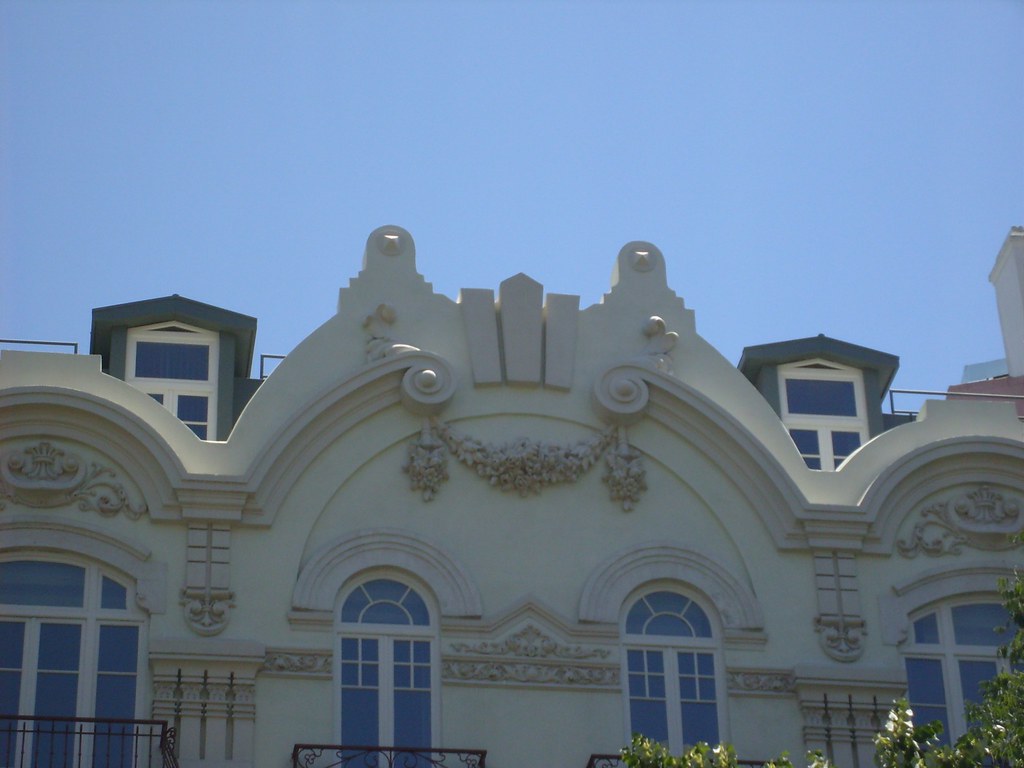
#210 - Rua alexandre Herculano Sky II


Alexandre Herculano de Carvalho e Araújo (March 28, 1810—September 13, 1877), Portuguese historian, was born in Lisbon of humble stock, his grandfather having been a foreman stonemason in the royal employ.

Writings

On entering parliament in 1840 he resigned the editorship to devote himself to history, but he still remained its most important contributor. Up to the age of twenty-five Herculano had been a poet, but he then abandoned poetry to Garrett, and after several essays in that direction he definitely introduced the historical novel into Portugal in 1844 by a book written in imitation of Walter Scott. Eurico treats of the fall of the Visigothic monarchy and the beginnings of resistance in the Asturias which gave birth to the Christian kingdoms of the Iberian Peninsula, while the Monge de Cister, published in 1848, describes the time of King John I, when the middle class and the municipalities first asserted their power and elected a king in opposition to the nobility.

From an artistic standpoint, these stories are rather laboured productions, besides being ultra-romantic in tone; but it must be remembered that they were written mainly with an educational object, and, moreover, they deserve high praise for their style. Herculano had greater book learning than Scott, but lacked descriptive talent and skill in dialogue. His touch is heavy, and these novels show no dramatic power, which accounts for his failure as a playwright, but their influence was as great as their followers were many, and they still find readers. [*]

27/07/2008

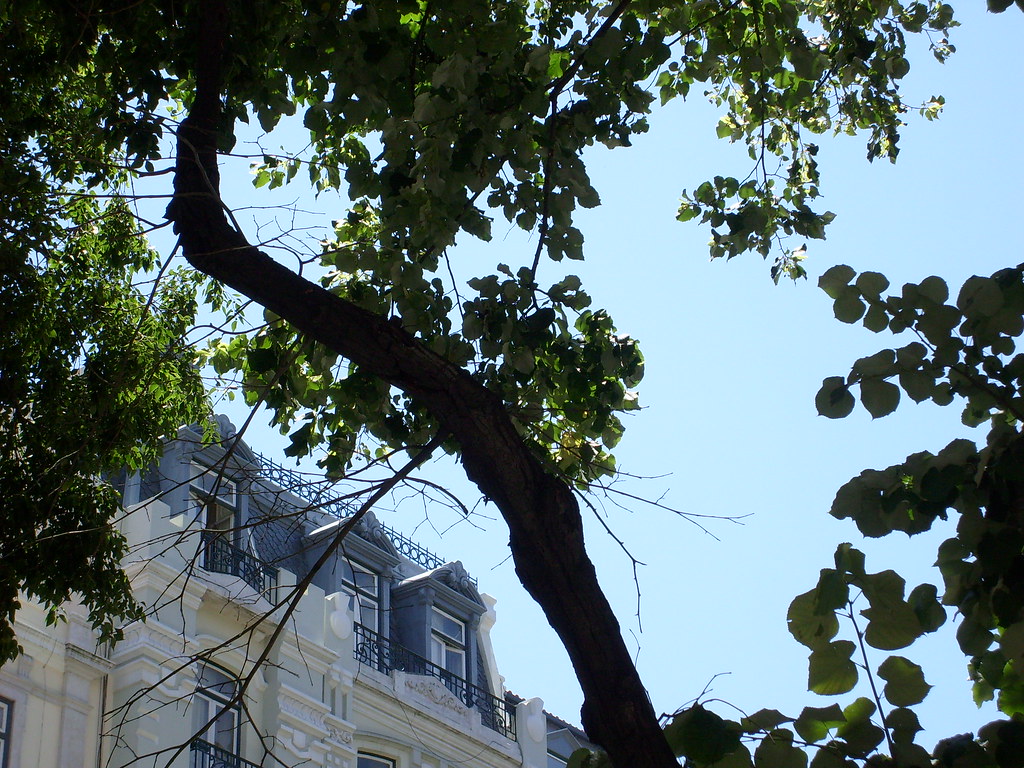
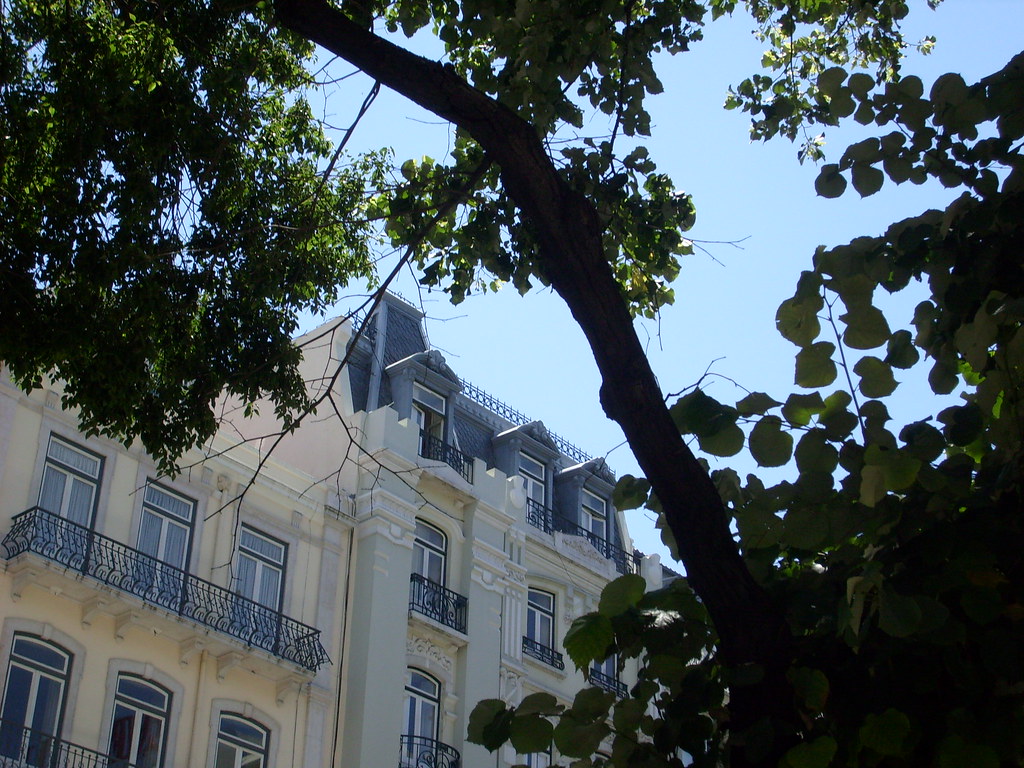
#209 - Rua Alexandre Herculano Sky I


Alexandre Herculano de Carvalho e Araújo (March 28, 1810—September 13, 1877), Portuguese historian, was born in Lisbon of humble stock, his grandfather having been a foreman stonemason in the royal employ.
He received his early education, comprising Latin, logic and rhetoric, at the Necessidades Monastery, and spent a year at the Royal Marine Academy studying mathematics with the intention of entering on a commercial career. In 1828 Portugal fell under the absolute rule of D. Miguel, and Herculano, becoming involved in the unsuccessful military pronunciamento of August 1831, had to leave Portugal clandestinely and take refuge in England and France. In 1832 he accompanied the Liberal expedition to Terceira Island as a volunteer, and was one of D. Pedro's famous army of 7500 men who landed at the Mindelo and occupied Oporto. He took part in all the actions of the great siege, and at the same time served as a librarian in the city archives. He published his first volume of verses, A Voz de Propheta, in 1832, and two years later another entitled A Harpa do Crente.

Privation had made a man of him, and in these little books he proves himself a poet of deep feeling and considerable power of expression. The stirring incidents in the political emancipation of Portugal inspired his muse, and he describes the bitterness of exile, the adventurous expedition to Terceira, the heroic defence of Oporto, and the final combats of liberty. In 1837 he founded the Panorama in imitation of the English Penny Magazine, and there and in Illustraco he published the historical tales which were afterwards collected into Lendas e Narratives; in the same year he became royal librarian at the Ajuda Palace, which enabled him to continue his studies of the past. The Panorama had a large circulation and influence, and Herculano's biographical sketches of great men and his articles of literary and historical criticism did much to educate the middle class by acquainting them with the story of their nation, and with the progress of knowledge and the state of letters in foreign countries. [*]