Paulo Santos's photo
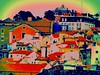
The Madragoa is a popular neighborhood of Lisbon, near the Tagus river, whose name comes from the presence in times of the Convent of the Madres de Goa. The legend mind that the neighborhood was born of the thousands of grains of sand that the seagulls transported to there. The origin of the name is lost in time. Some people say that the word refers to the nickname of a fidalga from Madeira Island "Mandragam" or that comes from "Mother of Goa." Before the earthquake, in XVll century, the district had the name "Moçambo" and was not more than a small town inhabited mainly by people of African origin. In the past, part of Madragoa was a cluster of convents and palaces, where they lived the Trinas, Bernardas or Inglezinhas. But were the workers who gave life to the neighborhood. Among the XVlll and XlX centuries, the population significantly changed. At that time, many people came to Lisbon from the region of the Ria de Aveiro, in particular from Ovar, hence the name ovarinas. Subsequently, most of these people have chosen to stay in Madragoa. Most were married, fishermen and varinas. Among many of the architectural works of Madragoa was the Palace of the Dukes of Aveiro, the House of the Marquis de Abrantes and older and modest chapels of Lisbon, the Mártires. Also there is the Embassy of France, where Gil Vicente (after St. George's Castle), initiated the Portuguese theater.