Showing posts with label museu. Show all posts

30/06/2009

Theme day topic: Empty


Cidade Museum

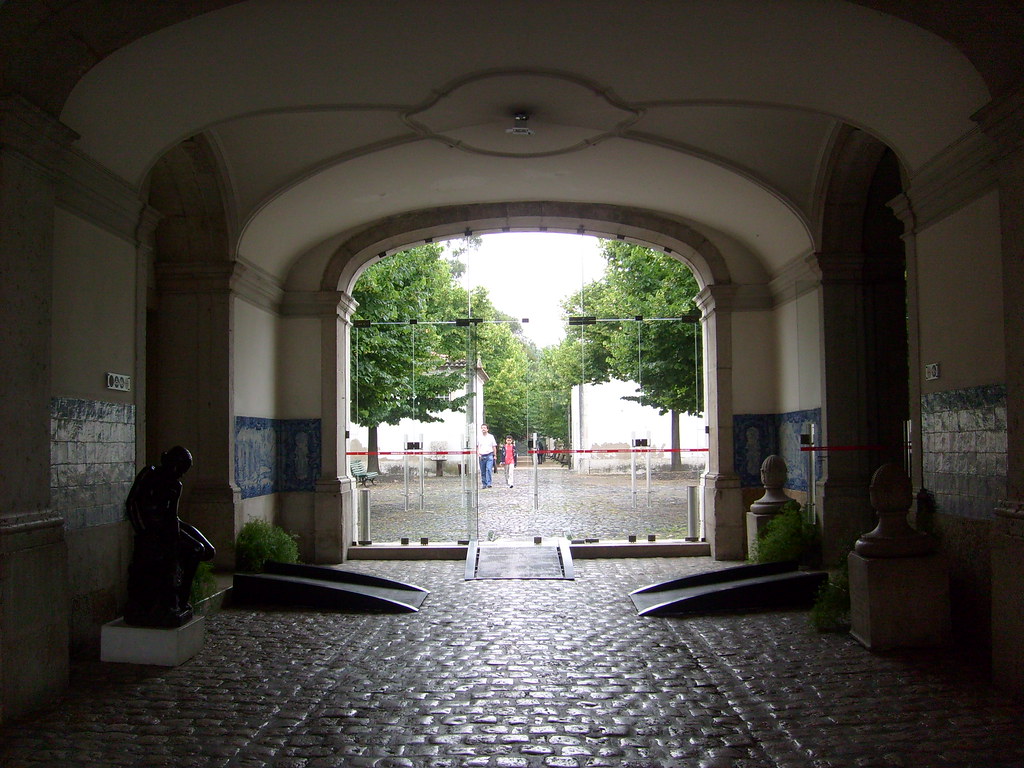
The Cidade Museum (City Museum) is situated in the lovely Pimenta Palace, in Campo Grande, on the northern side of the Portuguese capital: Lisboa. This Museum presents a rich collection, along with the also very rich history of Lisboa, comprising collections of archaeology, painting, drawing, ceramics, among many others that testify the town’s history since the remote pre-historical times up until the beginning of the 20th century. As the collection is installed in the beautiful Pimenta Palace, the visit includes the interior and the gardens of the palace. Some of the collection’s highlights are the Maquette of Lisboa city in 1750, five years before the big earthquake and tsunami of 1755 that destroyed the majority of the town; the documents of the construction time of the majestic Águas Livres aqueduct; or the piano where Alfredo Keil wrote the “Portuguesa”, the National hymn, among many other historical pieces. [*]

Click here to view thumbnails for all participants

07/05/2008

#128 - Gulbenkian Series VI

Photobucket - Video and Image Hosting

Photobucket - Video and Image Hosting


Museum
The Building
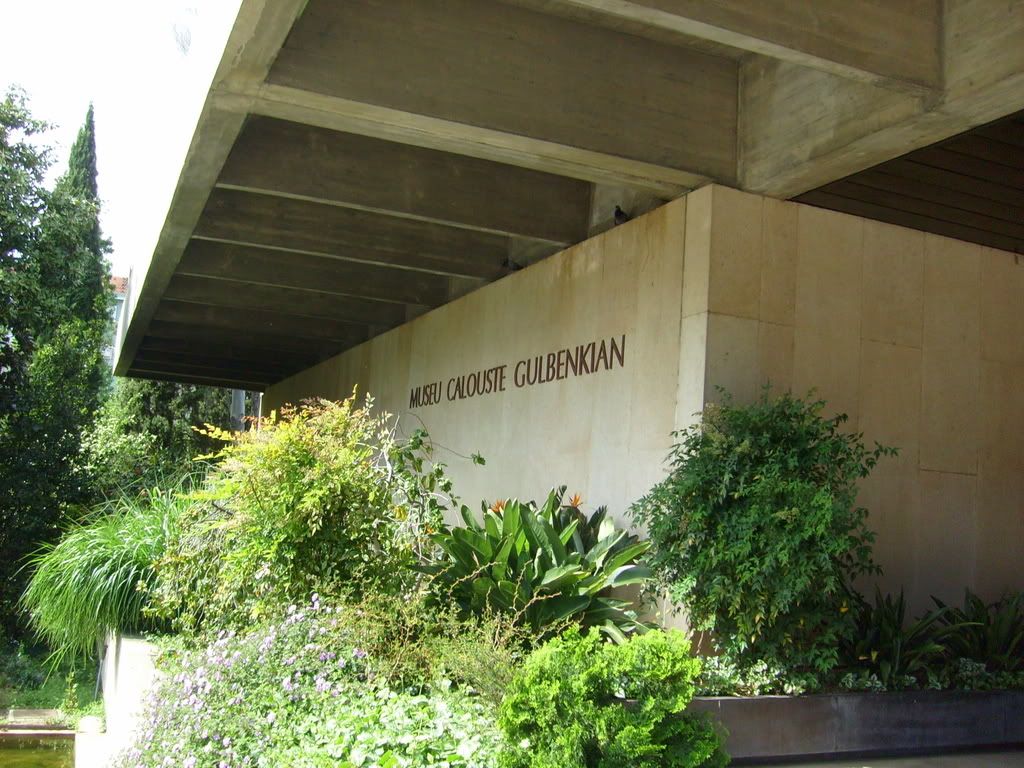
"The project for the Calouste Gulbenkian Foundation and Museum, inaugurated in 1969, was the result of a limited competition that took place from, 1959 to 1960 between three teams of architects. The ambitious and detailed specifications being based on the presupposition that the new building was to serve as “a perpetual homage to the memory of Calouste Gulbenkian, and its lines were to reflect the essential features of his character – concentrated spirituality, creative force and simplicity of life”. The project had to take into consideration various types of installations to house the museum, auditoriums and library and also the administrative and technical services of the foundation. The site chosen was the Parque de Santa Gertrudes in Palhavã, Lisbon (the present site).
From the three solutions jointly presented that of the team made up of the architects Ruy Jervis d’Athouguia, Pedro Cid and Alberto Pessoa was selected as fulfilling the requirements of the commission to produce a sober, dignified building in a unified architectural setting. A large number of specialists in various areas worked on the project co-ordinated by the winning team. The remaining two projects were by an architectural team made up of Arnaldo Araújo, Frederico George and Manuel Laginha, and the other by Formosinho Sanches, Arménio Losa and Pádua Ramos.
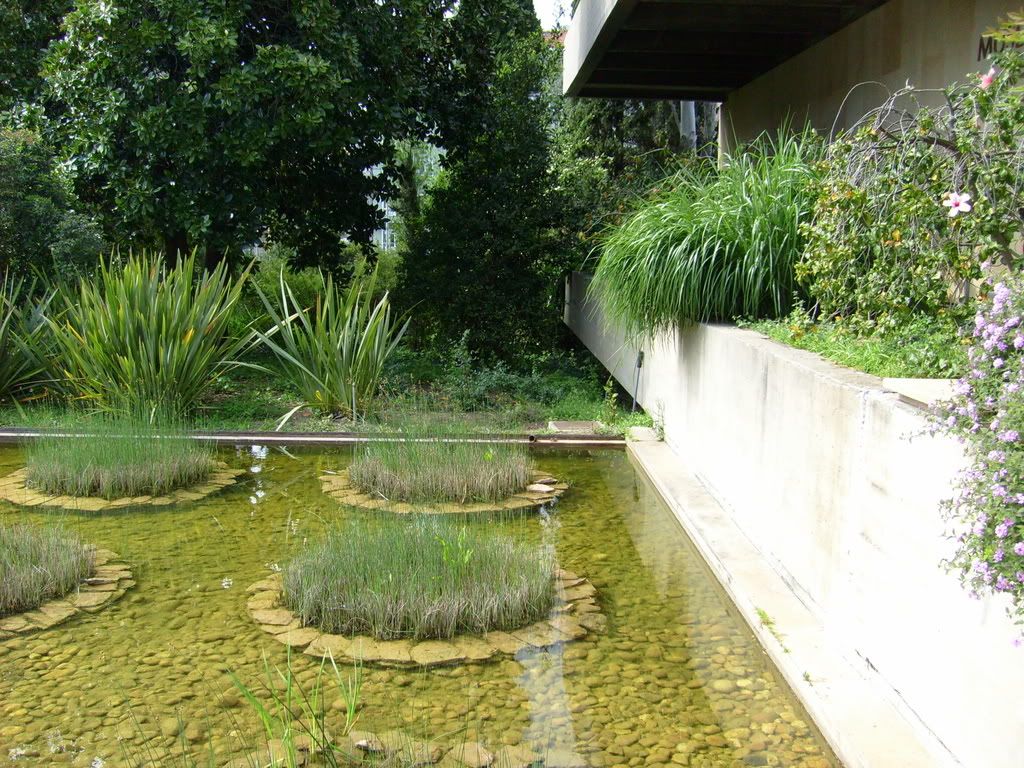
The existing architectural ensemble, simple in line with different areas ably linked together, is surrounded by a green area designed by the landscape architects Gonçalo Ribeiro Telles and António Viana Barreto, with lawns, trees, pools and even an open-air amphitheatre. The exterior or the museum is like a massive rectangular parallelepiped set on one of its longer sides where the use of concrete and granite creates a mellow chromatic equilibrium. Planned in relation to each object collected by Calouste Gulbenkian, on the lower floor it has a Temporary Exhibition Gallery, a small auditorium, a museum shop and cafeteria as well as the Art Library. A defining mark in Portuguese museum architecture, the edifice of the Museum is organised round two gardens with numerous tall picture windows that enable the visitor to enjoy Nature and Art. A noteworthy example of the latest trends in modern Portuguese architecture of the 1960s, the Calouste Gulbenkian Foundation was awarded the Valmor Prize for Architecture, in 1975. " [*]

04/05/2008

#125 - Gulbenkian Series III


Photobucket - Video and Image Hosting

Photobucket - Video and Image Hosting
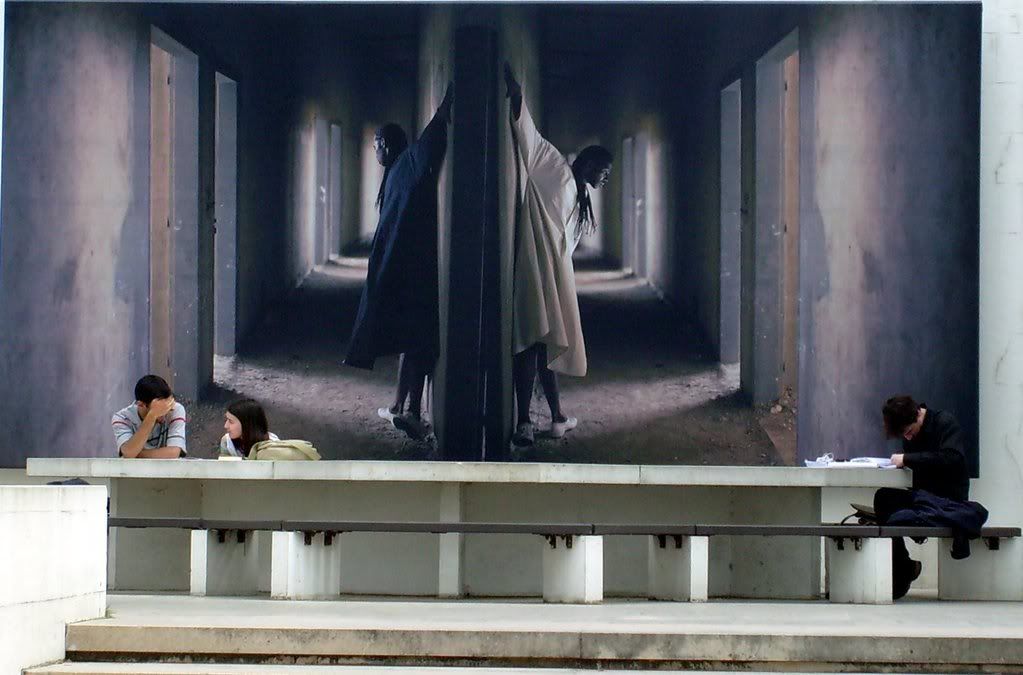
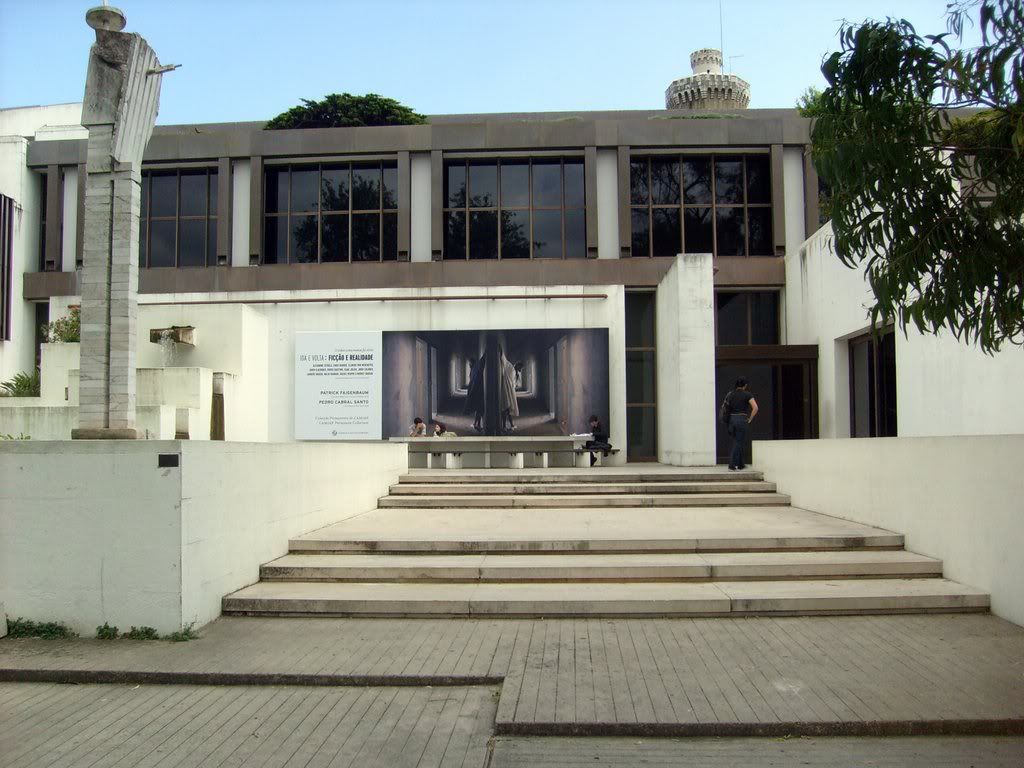
"A comprehensive collection of contemporary art and sculpture has also been acquired over the years, mainly Portuguese but with some works by British artists. This is housed in the José de Azeredo Perdigão Modern Art Centre.Modern Art Centre was opened in 1983 in southern part of the Gulbenkian Park. Ten years later, as a tribute to the Chairman of the Foundation's first Board, it was renamed the José de Azeredo Perdigão Modern Art Centre (CAMJAP).
The CAMJAP building consists of two separate sections: the Modern Art Museum, which comprises three interconnected galleries, and a space for cultural events, including a multi-purpose room for events and meetings. A reception hall with a cafeteria and bookshop links these premises." [*]

18/02/2008

#49 - History Lost

Photobucket - Video and Image Hosting
Front door

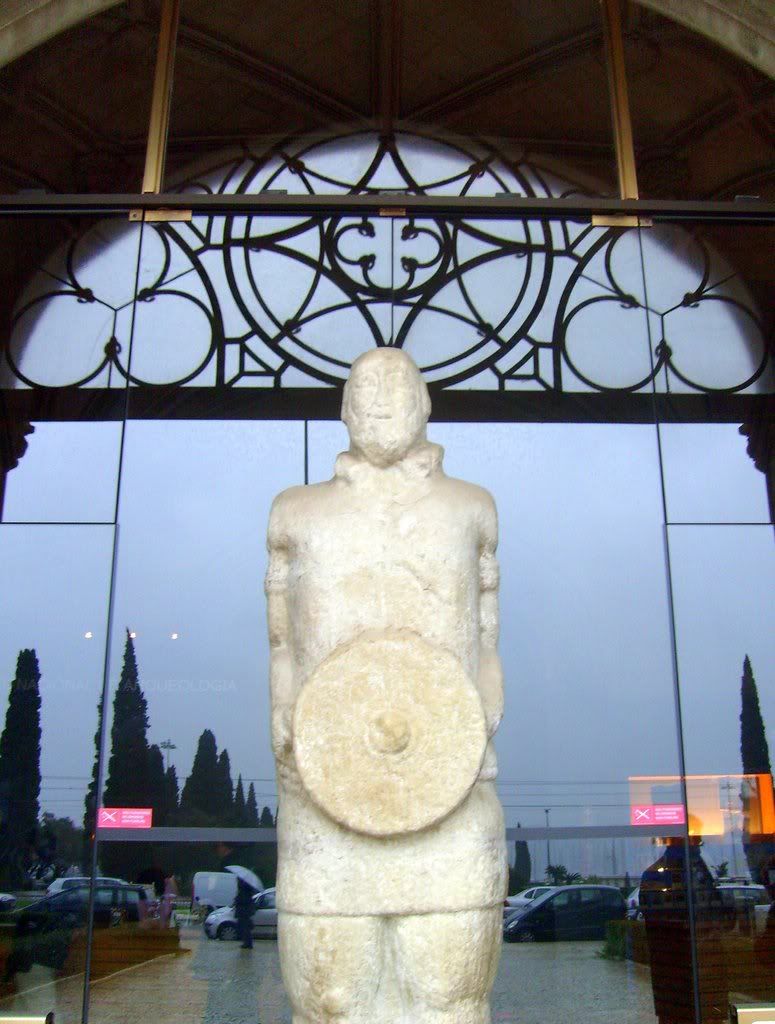
The National Museum of Archaeology "A centenary institution of Portuguese Culture" located in the Jerónimos Monastery .

Today’s National Museum of Archaeology (MNA) was founded in 1893 by Dr. José Leite de Vasconcelos. In more than a century of existence this Museum became a reference institution of Portuguese archaeology, with regular correspondence with museums, universities and research centres all over the World. The Museum’s collections gather the Founder’s first collections and those of Estácio da Veiga. Many other have been added, some come from other State departments (for example: archaeology collections of the old Portuguese Royal House, integrated in the Museum after the settlement of the Republic; archaeology collections of the former Beaux Arts Museum, incorporated when today’s National Museum of Ancient Art was created; etc.), another ones come from donations or legacies of collectors and devoted friends of the Museum; others come from the intense field work activity developed by the Museum or by other archaeologists; another ones from government dispatches, within the law, whenever archaeological finds in the Country are thought of national value.Besides the exhibitions, the Museum offers society (Portuguese and foreign) several other services. Conceived by its founder to be a kind of "Museum of the Portuguese Man", the MNA still follows the same basic vocation, that is, to account for the history of the settlement of our territory, from the beginning to the foundation of the nationality. It is the only institution in Portugal capable of doing it: because of its collections, its technical resources, its location in the Jerónimos Monastery (actual meeting point of nationals and foreigners), with special prominence to the schools from across the Country, which fully occupy the Museum's education department, yearly.
Photobucket - Video and Image Hosting

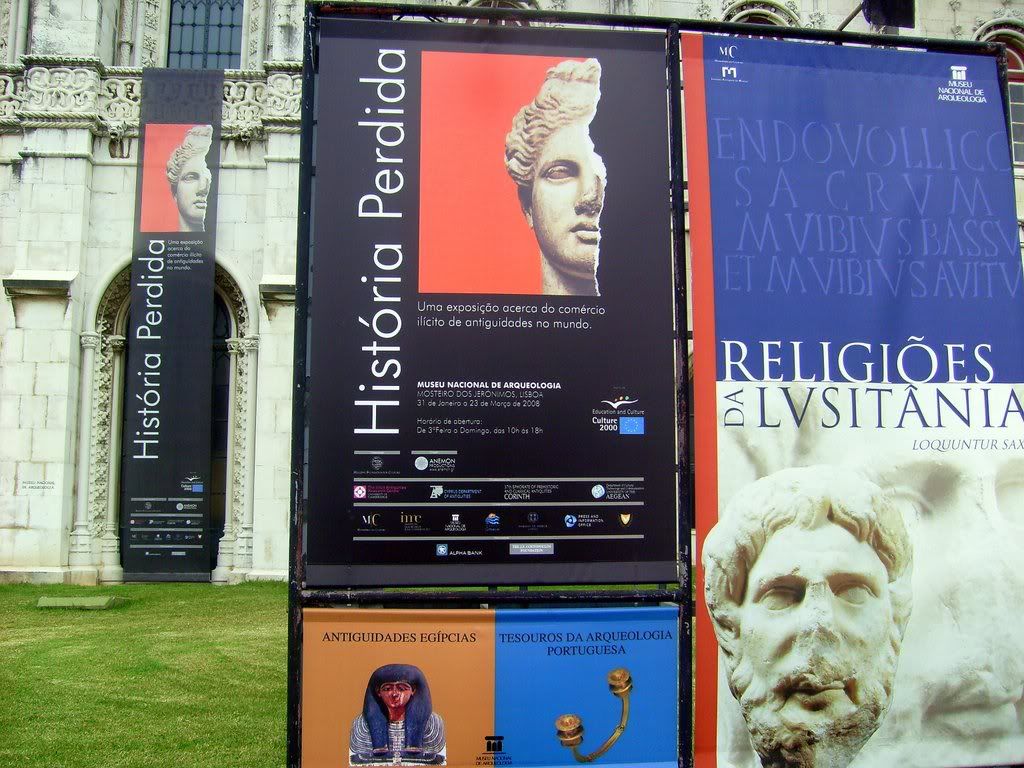
History Lost: An exhibition about the illicit trade of antiquities in the world.

Institutional organization: Hellenic Foundation for Culture.

Type of exhibition:International Cooperation Exhibition.

The removal of the Parthenon Marbles by Lord Elgin, in 1801, is famous. What is less well known is the extent of the looting of archaeological sites around the world today: that the majority of antiquities, which appear for sale on the art market, have been illegally dug and smuggled out of their country of origin.The steadily increasing number of museums in the U.S. and the rising demand for antiquities by private collectors in Europe, North America, Japan and Australia have exhausted the supply of legal antiquities. Few objects of the old collections, built up during the eighteenth century, are appearing on the market. The trade relies mainly on trafficking, theft and pillage. In contrast to the Elgin Marbles, the context and provenance of these objects will never be known. We will never know why they were created and what they have to say about our past. Taken out of context, they have lost their historical value. The escalating plunder of the world's archaeological heritage has not gone unnoticed by the international community. In 1970, UNESCO adopted the "Convention on the Means of Prohibiting and Preventing the Illicit Import, Export and Transfer of Ownership of Cultural Property". In 1972, after its ratification by four countries, the Convention went into effect. Today, 109 countries have adopted the Convention. The U.S. signed in 1983, Great-Britain in 2003.After the UNESCO Convention, museums, collectors and dealers still trading in antiquities of unknown provenance, began to use forged documents to cover their activities. As it was becoming increasingly difficult for western museums to buy antiquities, new large private collections were formed, containing previously unseen antiquities of unknown provenance. These collections, in turn, were exhibited, borrowed or bought by important museums in the West. Although the acquisitions made by large museums have been widely criticised, looting in Africa, Asia and Latin America has become more destructive due to the rise of art market prices. In Greece for example, due to the extensive looting of the Cyclades, we have lost the chance to find out more about the use and role of Cycladic idols and the history of these islands during the Bronze Age. Similarly, the destruction of Cyprus's cultural heritage intensified after the Turkish invasion. The antiquities trade spiralled out of control in the occupied northern part of Cyprus. It is estimated that 15,000 to 20,000 Byzantine icons, mosaics and wall-paintings have been stolen.

11/02/2008

#42 - Detailed facade of Museu Nacional dos Coches

Photobucket - Video and Image Hosting


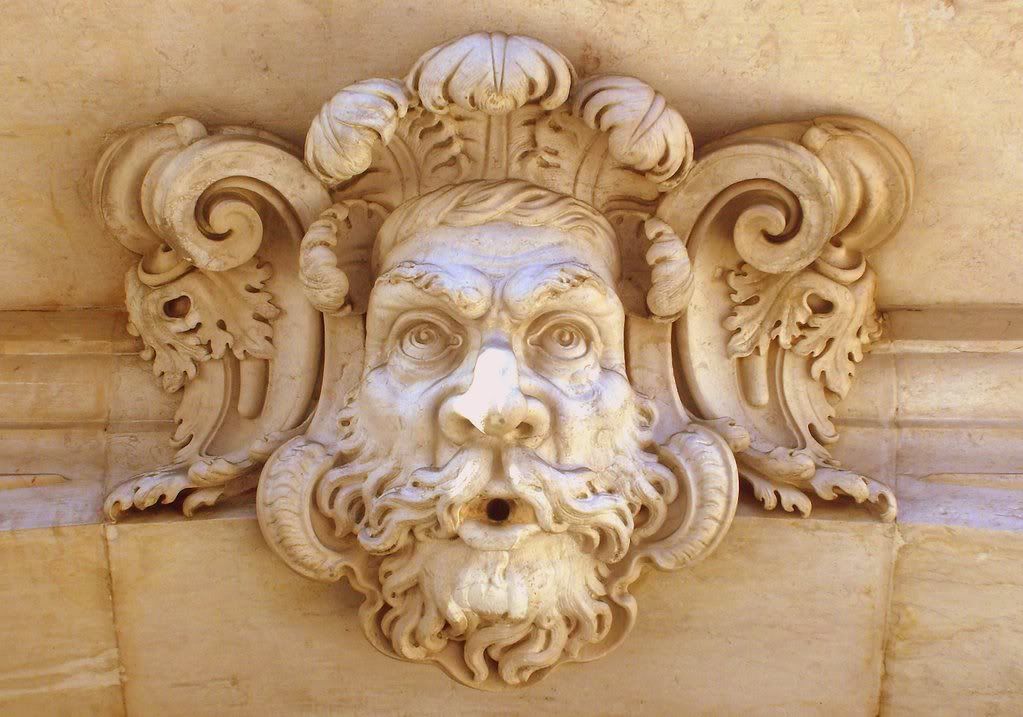
"The National Coach Museum houses and exhibits, under an exquisite ambiance of the old Royal Riding Arena of Belém Palace, an exceptional collection of ceremonial vehicles from the Royal family, dating from 17th Century to late19th Century.Considered the most remarkable collection in the world of this kind, it allows the visitor to follow both the technical evolution of animal pulled transport and the changes of taste expressed in the decorative arts and vehicle ornaments.
The National Coach Museum is one of the most visited museums in Portugal and certainly of Lisbon."

I prefer its façade!
I dedicate this post to The D in D & T & The T in D & T from Athens [Perspective] for their kindness helpfull in my blogger templates :)

07/02/2008

#38 - Néctar


The Berardo Collection Museum is located at the Center of Exhibitions of the Centro Cultural de Belém Founded by José Berardo, is a permanent museum with temporary exhibitions, a partnership public - private, geared to a diverse audience with the aim of developing and encouraging habits of artistic enjoyment, integrating Lisbon in an area of cultural tourism. This space was amended and its relationship with the outside world enhanced. It has been adapted to contemporary existing architecture in order to find a dialogue between the space and art that incorporates. In their logic is the exploitation of art of the century XX and XXI little cultivated so far in Portugal, is looking well fill the gap, making known the evolution of art during this period, as well as promoting dialogue between the works of art through a cross look on the various trends, movements and techniques. Demand is attracting the public through a diverse organization of the works in seven clusters: Autonomy; Power of Color; Reeinvented Figure; Minimalisms; Pop & Ca; Surrealism, and More In addition, which has a turn over of three months. Thus the existing 856 works only 150 are exposed. Over that we could discover from exposure, it presents itself to us as a catalog of the panorama of artistic creation of the century XX and XXI, especially European and American, trying however to give prominence to the late artistic creation ports. A travel between games and the surreal dreams, the conscious and aware of the artists, the techniques of chance not controlled by the mind, by the introduction of a 4 th dimension, time, in the painting by Picasso, for psychoanalysis, the analysis of dreams, the eroticism, a society of consumption, the voyeurism, the representations of language, the aura of the objects of everyday life when they go for the artistic context, etc., via the Surrealism, Pop Art, abstrakt Arte , New Objectivity, Minimalism, Conceptualism and Arte Povera. On the exterior of the exhibition there is a double work of about seven metres from the artist Joana Vasconcelos, a feminist version of the famous "Le Porte Bouteilles" Marcel Duchamp. Entry of each of the cores can be found explanatory leaflets in Portuguese, English and French as well as writings on the wall the pink or green, if they relate to a class chronological or thematic, respectively. The objects are presented only for visual and consists of painting, sculpture, photography, video, books and documents. The works are exhibited on the wall, showcases, as well as on the floor. The expositive criteria is chronological and thematic, giving all works the same narrative importance regardless of its value.